Spanish Seafood Soup with Garlic Bread (Sopa de Mariscos)
A Spanish seafood soup with shrimp, clams, mussels, crab, and white fish in a rich saffron-tomato broth, served with crispy homemade garlic bread. Bold, aromatic, and ready in under an hour.
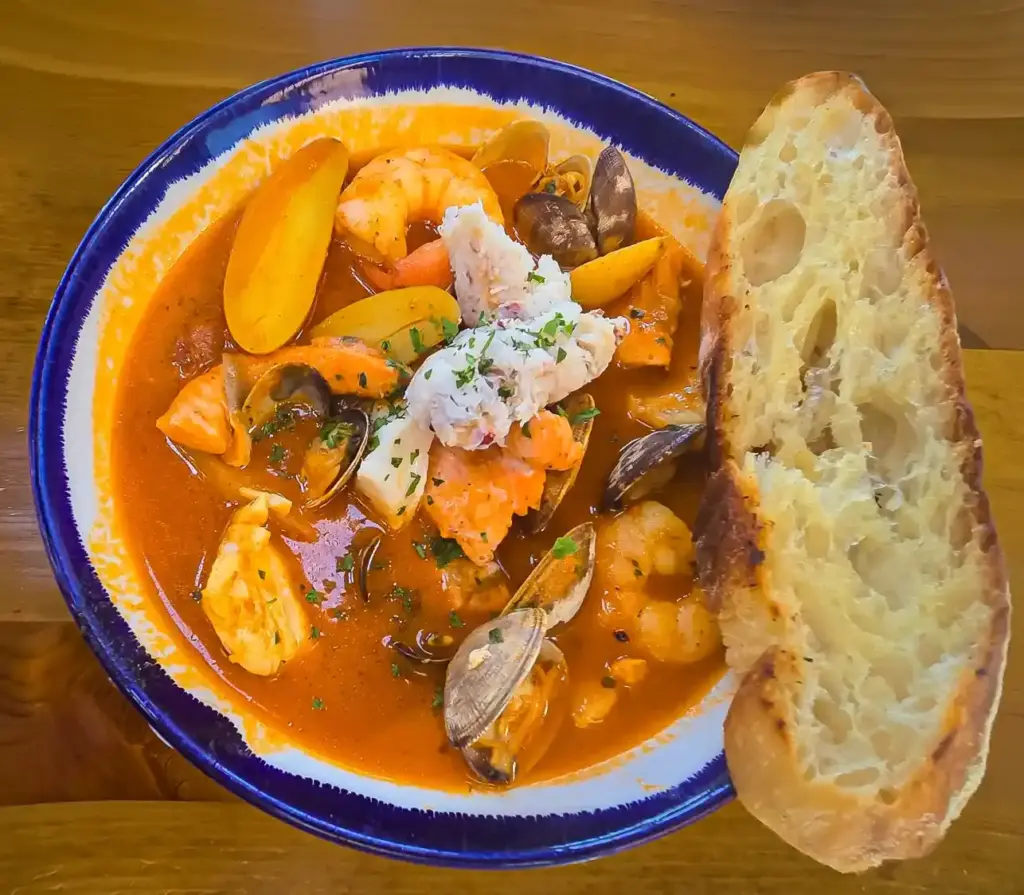
Sopa de Mariscos is Spain’s answer to the question of what to do when you have excellent seafood, excellent tomatoes, and want them to taste like the sea. It is a brothy, deeply flavored soup built on a patient sofrito of onion, garlic, and red pepper, deepened with smoked paprika and saffron, and finished with a mix of shellfish and white fish that cooks directly in the broth in the last few minutes. The version here uses shrimp, clams, mussels, crab meat, and white fish – the combination you find along the coasts of Galicia and Andalusia, where this soup has been feeding families for a very long time.
The foundation is the sofrito, and it is worth giving it full attention. Onion and red pepper cooked low and slow until they genuinely soften and sweeten – not just translucent, but collapsing into themselves. The garlic and smoked paprika go in at the end of that cook, blooming in the oil for thirty seconds before anything liquid touches them. Paprika burns fast. Thirty seconds, and then the tomato paste and wine go in to protect it. Rushing the sofrito or adding the paprika too late and in too hot a pan are the two most reliable ways to make this broth taste flat instead of layered.
Saffron is optional but highly recommended. A small pinch steeped in two tablespoons of warm water is all it takes, and it adds a subtle floral quality and a warmer, more complex color to the broth. If saffron is genuinely unavailable, a small pinch of turmeric added with the paprika gets the color without the depth – better than nothing, but not quite the same thing.
The seafood goes in by cook time, not by size. Clams and mussels need the most time – they go in first with the lid on. Shrimp and fish go in several minutes later because they overcook quickly. Crab meat, already cooked, is stirred in at the very end and only needs a minute to warm through. The most common mistake with Sopa de Mariscos is adding everything at once and ending up with rubbery shrimp and disintegrating fish. Give each piece of seafood its proper moment.
The garlic bread is genuinely part of the dish, not an afterthought. It is how you get every last drop of broth out of the bowl, and a cold plain slice of bread next to a bowl of Sopa de Mariscos is a missed opportunity.
If you enjoy the bold, tomato-forward flavors of Spanish cooking, our Spanish Gazpacho is the cold counterpart to this soup – same depth of tomato, a completely different temperature and mood. For another European soup with a slow-built broth base, our Classic Italian Minestrone uses a similar sofrito technique with a very different result.
Ingredients for Spanish Seafood Soup with Garlic Bread (Sopa de Mariscos)
- For the soup:
- 3 tablespoons olive oil
- 1 large onion, finely diced
- 1 red bell pepper, finely diced
- 4 garlic cloves, minced
- 2 tablespoons tomato paste
- 1 teaspoon smoked paprika
- 1/2 teaspoon sweet paprika
- A generous pinch of saffron threads, steeped in 2 tablespoons warm water
- 400g (14 oz) crushed tomatoes
- 250ml (1 cup) dry white wine
- 750ml (3 cups) fish stock
- 300g (10 oz) clams, scrubbed
- 300g (10 oz) mussels, scrubbed and debearded
- 300g (10 oz) large raw shrimp, peeled and deveined
- 200g (7 oz) white fish fillets (cod, halibut, or haddock), cut into 4 cm (1.5 inch) chunks
- 150g (5 oz) cooked crab meat
- Salt and black pepper, to taste
- Fresh flat-leaf parsley, chopped, for serving
- For the garlic bread:
- 1 baguette, cut into 12 thick slices
- 60g (4 tablespoons) unsalted butter, softened
- 3 garlic cloves, very finely minced or grated
- 2 tablespoons fresh flat-leaf parsley, finely chopped
- Pinch of salt
How to Make Spanish Seafood Soup with Garlic Bread (Sopa de Mariscos)
-
1
Heat the olive oil in a large heavy pot or Dutch oven over medium heat. Add the onion and red bell pepper and cook, stirring occasionally, for 10-12 minutes until completely softened and beginning to caramelize at the edges.
-
2
Add the minced garlic, smoked paprika, and sweet paprika. Stir and cook for 30-45 seconds until fragrant. Do not let the paprika darken or it will turn bitter.
-
3
Add the tomato paste and stir to coat. Cook for 1-2 minutes, then pour in the white wine. Stir, scraping up any bits from the bottom, and let the wine reduce for 2 minutes.
-
4
Pour in the crushed tomatoes, fish stock, and saffron water (threads included). Stir well and bring to a gentle simmer (about 90°C / 195°F). Season with salt and black pepper. Simmer uncovered for 10 minutes to build the broth.
-
5
Add the clams and mussels. Cover the pot and cook for 4-5 minutes, shaking the pot once or twice, until the shells open. Discard any that remain closed after cooking.
-
6
Add the shrimp and fish chunks. Simmer uncovered for 3-4 minutes until the shrimp are fully pink and curled and the fish is just cooked through and flakes easily.
-
7
Stir in the crab meat and cook for 1 minute to warm through. Taste the broth and adjust salt and pepper as needed.
-
8
While the soup finishes, make the garlic bread: mix the softened butter with the minced garlic, chopped parsley, and a pinch of salt. Heat a skillet or grill pan over medium-high heat (200°C / 390°F). Brush the baguette slices generously on both sides with the garlic butter and toast for 2-3 minutes per side until golden and crisp at the edges.
-
9
Ladle the soup into deep bowls, giving each serving a good mix of clams, mussels, shrimp, fish, and crab. Garnish with fresh chopped parsley and serve immediately with the hot garlic bread alongside.
Nutrition (per serving)
- Carbs 35g · 33%
- Protein 38g · 36%
- Fat 15g · 32%
Tips & FAQ
Can I use frozen seafood instead of fresh?
What do I do if some clams or mussels do not open?
Can I make the broth ahead of time?
What can I substitute for saffron?
What white wine should I use?
More Soups
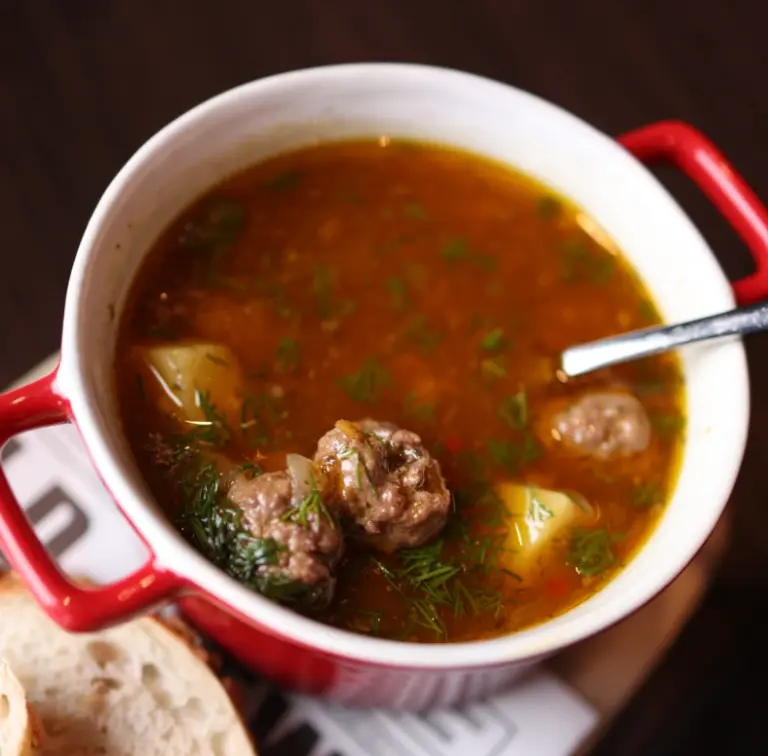
Homemade Meatball Soup with Potatoes and Fresh Dill
A hearty, clear-broth meatball soup with tender beef meatballs, potato chunks, carrots, and a generous handful of fresh dill. Simple, comforting, and ready in just over an hour.

Ukrainian Homemade Borscht Soup with Sour Cream
Classic Ukrainian borscht made with beef on the bone, beets, cabbage, potatoes, and a proper vegetable sauté that keeps the broth that deep crimson red. Served with sour cream and fresh parsley.
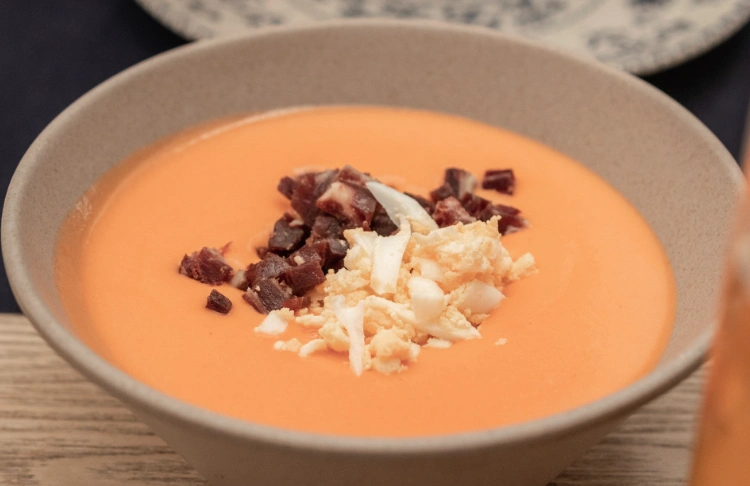
Spanish Salmorejo Cold Tomato Soup
Salmorejo is a thick, silky Spanish cold tomato soup from Córdoba made with just ripe tomatoes, bread, garlic, and olive oil, then topped with jamón serrano and hard-boiled egg. No cooking required.
Related searches