Spanish Salmorejo Cold Tomato Soup
Salmorejo is a thick, silky Spanish cold tomato soup from Córdoba made with just ripe tomatoes, bread, garlic, and olive oil, then topped with jamón serrano and hard-boiled egg. No cooking required.

Salmorejo is the cold soup that people discover on a trip to Andalusia and then spend the next several months trying to recreate at home. It comes from Córdoba, and unlike its more famous cousin gazpacho, it contains almost nothing: very ripe tomatoes, stale white bread, garlic, sherry vinegar, good olive oil, and salt. That is the full list. What makes it remarkable is the texture – thick and creamy and smooth, with a deep tomato flavor that tastes more concentrated than any soup you have cooked for hours. It is served cold and topped with diced jamón serrano and crumbled hard-boiled egg, both of which are traditional and non-negotiable if you want the real thing.
The tomatoes have to be genuinely ripe. Not nearly ripe, not vine tomatoes bought in winter. The soup is raw, and the tomato is carrying the entire flavor, which means that an underripe tomato will produce a sharp, flat result regardless of everything else. In summer, when tomatoes are at their best, salmorejo almost makes itself. In winter, look for the ripest, darkest vine-ripened tomatoes available and give them a couple of days on the counter if needed.
The bread is what gives salmorejo its body. Day-old white bread with the crusts removed – something like ciabatta, a French baguette, or any plain white loaf – goes into the blender with the tomatoes and soaks up the liquid while it blends. Too little bread and the soup is thin and watery. Too much and it tastes gummy and starchy. The ratio here is tested: 150 grams of bread to 1 kilogram of tomatoes produces the thick but still pourable consistency you see in the bowl.
The olive oil goes in last, in a slow stream while the blender runs, the same way you would make a vinaigrette or a mayonnaise. This is what creates the emulsified, creamy texture. Use the best extra virgin olive oil you have – it is a main flavor, not a background note.
Salmorejo needs at least two hours in the refrigerator before serving. It thickens as it chills, and the flavors come together properly only when the soup is genuinely cold. Make it the morning before you plan to serve it if possible.
If you enjoy cold Spanish soups, our Spanish Gazpacho is the closest relative – thinner, with more vegetables, and a lighter result. For a warm Spanish option with bold tomato flavor, our Sopa de Mariscos takes the same Andalusian pantry in a completely different direction.
Ingredients for Spanish Salmorejo Cold Tomato Soup
- For the salmorejo:
- 1 kg (2.2 lb) very ripe tomatoes (Roma or vine-ripened)
- 150g (5 oz) stale white bread, crusts removed, torn into pieces
- 2 small garlic cloves (or 1 large), roughly chopped
- 2 tablespoons sherry vinegar (or red wine vinegar)
- 1 teaspoon fine salt, plus more to taste
- 120ml (1/2 cup) extra virgin olive oil, plus extra for drizzling
- For serving:
- 3 hard-boiled eggs, peeled and roughly chopped or crumbled
- 80g (3 oz) jamón serrano or prosciutto, finely diced
- Extra virgin olive oil, for drizzling
How to Make Spanish Salmorejo Cold Tomato Soup
-
1
Core and roughly chop the tomatoes. Place them in a blender with the torn bread, garlic, sherry vinegar, and salt. Let the mixture sit for 5 minutes so the bread begins to absorb the tomato juices.
-
2
Blend on high speed for 2-3 minutes until completely smooth. The mixture will look thick and rough at first and then become very smooth as the bread fully breaks down.
-
3
With the blender running on medium speed, slowly pour in the olive oil in a thin, steady stream. Once all the oil is added, increase to high speed and blend for a further 60 seconds until the soup looks creamy and emulsified with a slightly lighter color.
-
4
Taste and adjust seasoning with more salt or sherry vinegar as needed. The soup should be bright, savory, and well-balanced - not sharp, not flat.
-
5
Pour the salmorejo through a fine-mesh strainer into a large bowl or container, pressing with a spatula to push it through. This step removes any remaining tomato skin and seeds and gives the soup its signature silky texture. If your blender is powerful enough to fully process the skins, you may skip this step and strain only if desired.
-
6
Cover and refrigerate for at least 2 hours until thoroughly cold. The soup will thicken slightly as it chills.
-
7
Meanwhile, hard-boil the eggs: place them in a small saucepan, cover with cold water, and bring to a boil (100°C / 212°F). Reduce heat and simmer for 10 minutes. Transfer to a bowl of ice water, peel once cool, and chop or crumble the whites and yolks separately or together.
-
8
Stir the chilled salmorejo well before serving - it can settle and separate slightly in the refrigerator. Ladle into bowls, top each with a portion of diced jamón serrano and crumbled hard-boiled egg, and finish with a small drizzle of good olive oil.
Nutrition (per serving)
- Carbs 18g · 22%
- Protein 9g · 11%
- Fat 24g · 67%
Tips & FAQ
What is the difference between salmorejo and gazpacho?
My salmorejo turned out too thin. What went wrong?
Can I make salmorejo ahead of time?
Can I make this without jamón or make it vegetarian?
What bread should I use?
More Soups
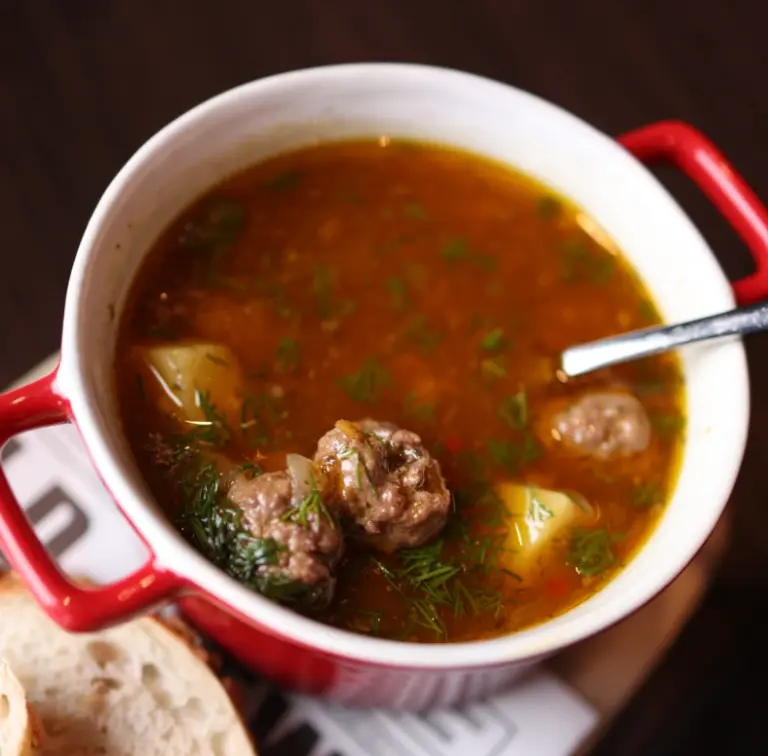
Homemade Meatball Soup with Potatoes and Fresh Dill
A hearty, clear-broth meatball soup with tender beef meatballs, potato chunks, carrots, and a generous handful of fresh dill. Simple, comforting, and ready in just over an hour.
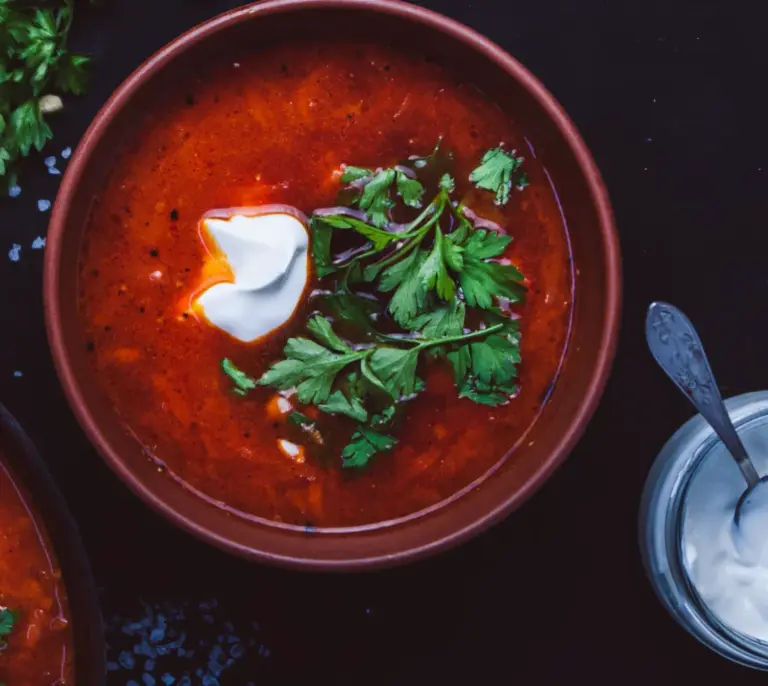
Ukrainian Homemade Borscht Soup with Sour Cream
Classic Ukrainian borscht made with beef on the bone, beets, cabbage, potatoes, and a proper vegetable sauté that keeps the broth that deep crimson red. Served with sour cream and fresh parsley.
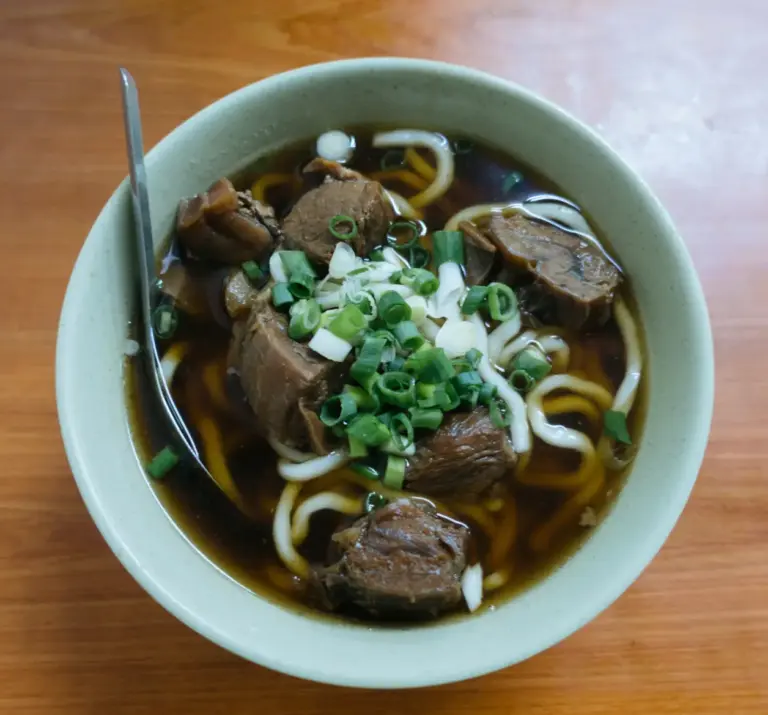
Taiwanese Braised Beef Noodle Soup
Taiwanese braised beef noodle soup with tender beef shank, thick wheat noodles, and a rich, fragrant dark soy broth spiced with star anise, cinnamon, and doubanjiang. A proper bowl worth the time it takes.
Related searches