Classic Italian Minestrone Soup
A classic Italian minestrone made with a rich soffritto base, cannellini beans, seasonal vegetables, small pasta, and a Parmesan rind simmered in for depth. Hearty, simple, and better the next day.
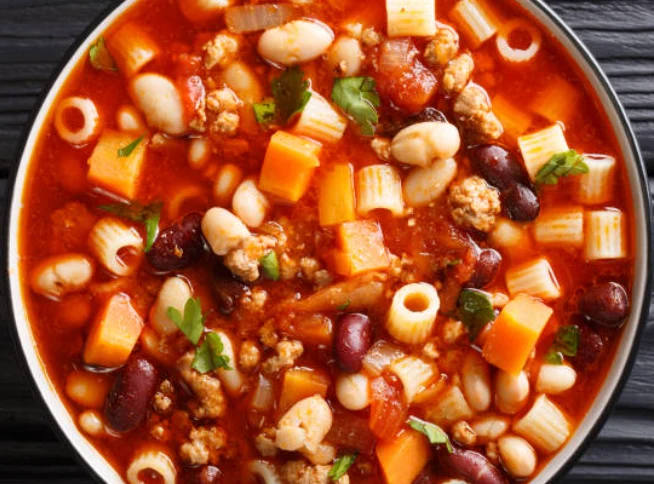
Minestrone is not a fixed recipe. It is an approach – a way of building a deeply flavored vegetable soup from whatever is in season, anchored by a consistent method and a handful of constants that make it taste unmistakably Italian. Those constants are the soffritto base of onion, carrot, and celery cooked low and slow in olive oil; canned tomatoes for body and acidity; cannellini beans for protein and creaminess; small pasta added near the end; and a Parmesan rind, dropped into the pot at the start and fished out before serving, that gives the broth a savory, almost meaty depth that is impossible to get any other way.
The soffritto is not a step to rush. The onion, carrot, and celery need at least ten minutes over medium-low heat to soften completely and begin to turn translucent. If they go in underdone and the heat gets raised too quickly, they stay slightly raw-tasting in the finished soup. Patience here pays off in flavor that carries through the entire pot.
The Parmesan rind is the ingredient most home cooks skip, and the soup is noticeably better when they do not. Most supermarkets sell rind bags specifically for this purpose. If you have been buying Parmesan by the wedge, save the rinds in a zip bag in the freezer – they keep for months and make every soup they go into taste like it has been cooking all day.
The pasta goes in last, about ten to twelve minutes before you plan to serve. Cooking it directly in the broth rather than separately allows it to absorb flavor and release some starch that thickens the soup slightly. The tradeoff is that pasta continues to swell as it sits, so if you plan to have leftovers, cook the pasta separately and add it to individual bowls at serving time. This keeps the texture right on day two.
Minestrone lands between soup and stew and pairs well with bread for a complete meal. If you enjoy hearty Italian comfort food, our Classic Spaghetti Bolognese is worth having in the same rotation – and for another vegetable-forward soup with real body, our Creamy Broccoli Cheddar Soup is an easy weeknight option.
Ingredients for Classic Italian Minestrone Soup
- 3 tablespoons olive oil
- 1 large onion, finely diced
- 3 celery stalks, finely diced
- 3 medium carrots, peeled and diced
- 4 garlic cloves, minced
- 1 can (400g) diced tomatoes
- 2 medium zucchini, diced
- 200g green beans, trimmed and cut into 2cm pieces
- 2 cans (800g total) cannellini beans, drained and rinsed
- 1.5 liters (6 cups) vegetable broth
- 1 Parmesan rind (optional but strongly recommended)
- 1 teaspoon dried thyme
- 1 bay leaf
- Salt and black pepper, to taste
- 150g (5 oz) small pasta (ditalini, elbows, or small shells)
- 100g (3.5 oz) kale or baby spinach, roughly chopped
- For serving:
- Freshly grated Parmesan cheese
- Good olive oil, for drizzling
- Crusty bread
How to Make Classic Italian Minestrone Soup
-
1
Heat the olive oil in a large heavy pot over medium-low heat. Add the onion, celery, and carrots with a pinch of salt. Cook, stirring occasionally, for 10-12 minutes until completely softened and just beginning to turn golden.
-
2
Add the garlic and cook for 1 minute, stirring, until fragrant.
-
3
Add the diced tomatoes, thyme, bay leaf, and Parmesan rind if using. Stir to combine and cook for 3 minutes.
-
4
Add the vegetable broth, zucchini, and green beans. Increase the heat to bring the soup to a gentle boil (about 95-100°C / 200-210°F), then reduce to a steady simmer.
-
5
Simmer uncovered for 15 minutes, until the zucchini and green beans are just tender.
-
6
Add the cannellini beans and the pasta. Stir and continue simmering for 10-12 minutes, until the pasta is just cooked through.
-
7
Remove and discard the bay leaf and Parmesan rind. Stir in the kale or spinach and cook for 2 more minutes until wilted.
-
8
Taste and adjust seasoning with salt and pepper.
-
9
Ladle into bowls and serve with a drizzle of olive oil, freshly grated Parmesan, and crusty bread alongside.
Nutrition (per serving)
- Carbs 47g · 58%
- Protein 14g · 17%
- Fat 9g · 25%
Tips & FAQ
Can I use different vegetables?
Should I cook the pasta separately?
What is a Parmesan rind and where do I get one?
Can I make this vegan?
How do I store and reheat minestrone?
More Soups
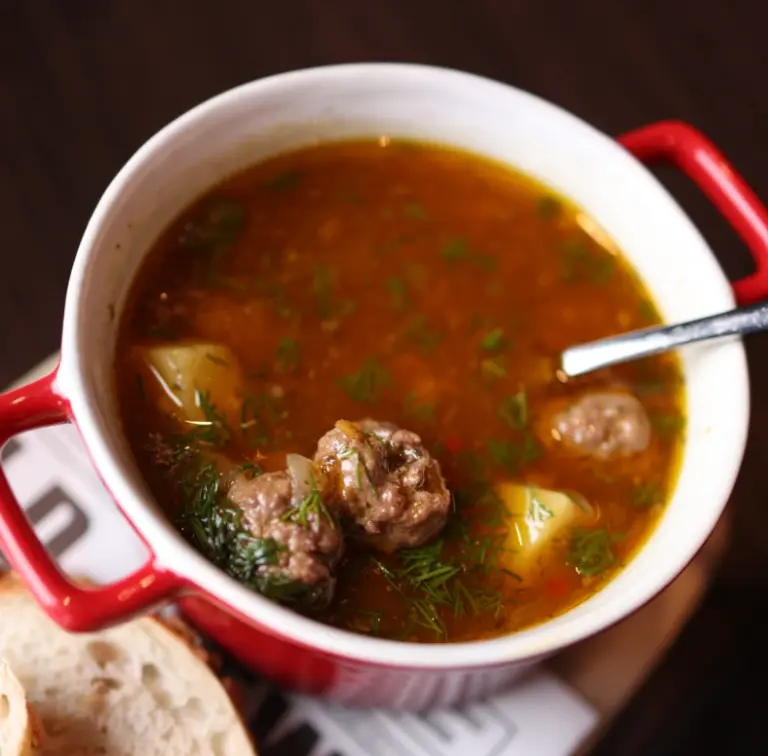
Homemade Meatball Soup with Potatoes and Fresh Dill
A hearty, clear-broth meatball soup with tender beef meatballs, potato chunks, carrots, and a generous handful of fresh dill. Simple, comforting, and ready in just over an hour.

Ukrainian Homemade Borscht Soup with Sour Cream
Classic Ukrainian borscht made with beef on the bone, beets, cabbage, potatoes, and a proper vegetable sauté that keeps the broth that deep crimson red. Served with sour cream and fresh parsley.
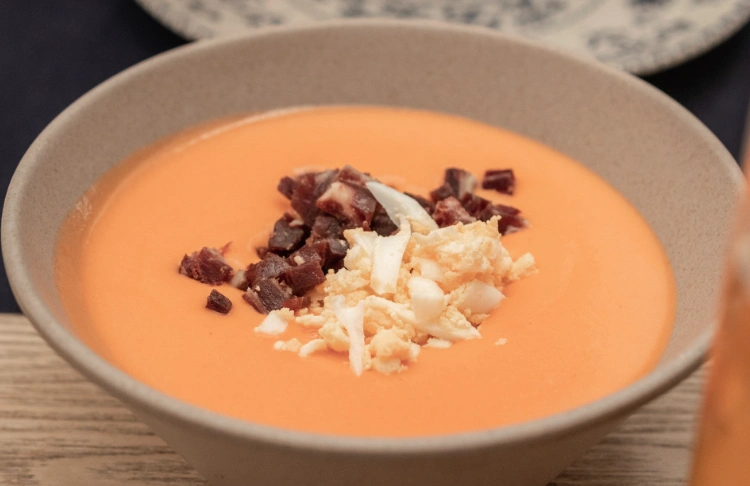
Spanish Salmorejo Cold Tomato Soup
Salmorejo is a thick, silky Spanish cold tomato soup from Córdoba made with just ripe tomatoes, bread, garlic, and olive oil, then topped with jamón serrano and hard-boiled egg. No cooking required.
Related searches