Taiwanese Souffle Castella Cake
A soft, impossibly jiggly Taiwanese castella cake made with a butter-milk base, four eggs, and a soft meringue. Baked low and slow in a water bath for a cloud-like crumb with zero dryness.
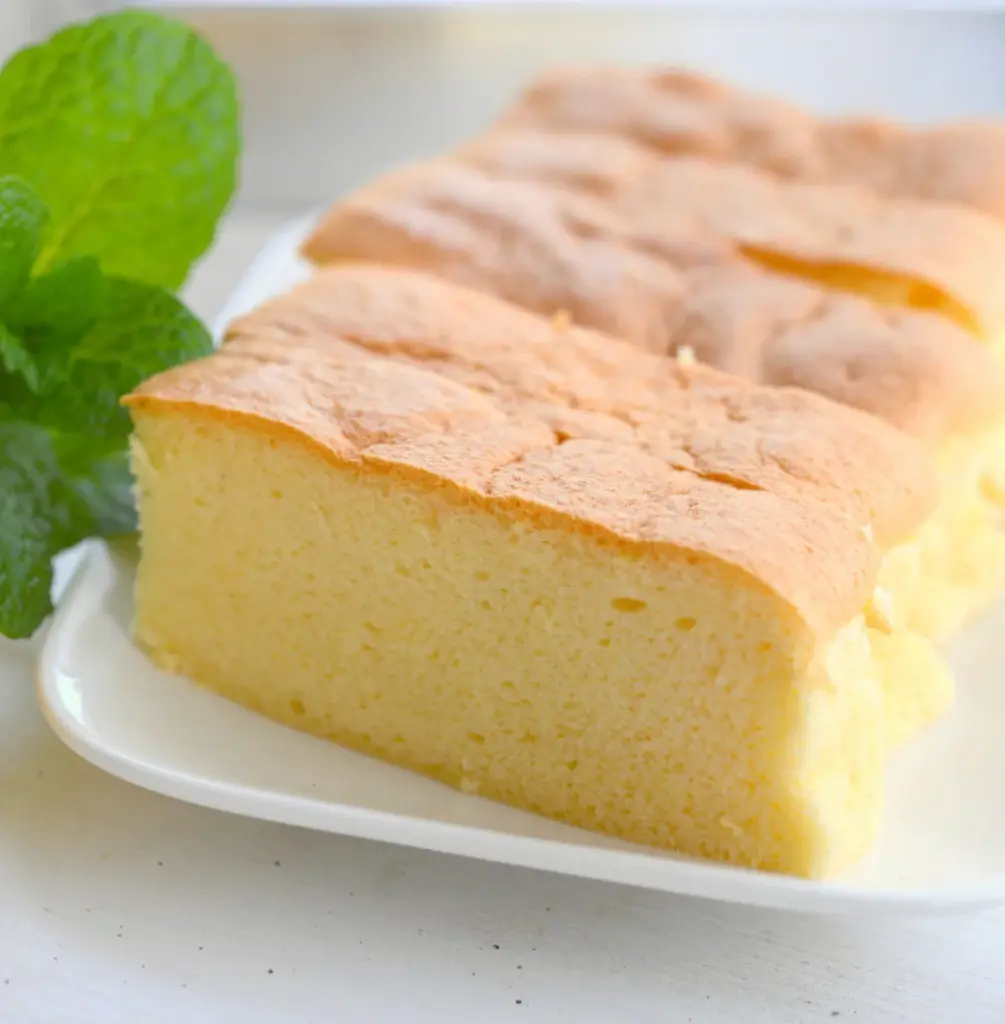
Taiwanese souffle castella cake is one of those bakes that looks deceptively simple and then surprises you with how different it is from anything else you have made. It uses just five main ingredients, no leavening powder, no complex technique – and yet the result is a cake that wobbles when you tap the pan, slices like a pillow, and has a crumb so fine and even it looks almost artificial. The secret is in two things: how you handle the butter and flour at the start, and how you whip the meringue at the end.
The first step – heating butter and milk together to around 80°C and immediately combining them with flour – is what gives this cake its unique structure. The hot liquid partially cooks the starch in the flour, creating a smooth, thick paste before the yolks go in. This is not a step you can skip or rush. If the mixture is too cool when the flour goes in, the paste will not form properly and the final texture will be noticeably different.
The meringue is where most mistakes happen. Taiwanese castella calls for soft peaks, not stiff. Soft peaks are what you have when the whites hold a shape but the tips curl over gently rather than standing straight. Stiff peaks create too much structural tension in the batter, which causes the top to dome unevenly and often crack during baking. Soft peaks stay loose enough to bake into that flat, even, gently wobbling surface that makes this cake recognizable.
The water bath is not optional. Setting the cake pan inside a larger tray of hot water keeps the oven environment humid throughout the entire bake, which prevents the outside from setting before the inside is done. It also keeps the top surface soft so it does not crack. Baking without a water bath at 150°C will give you a much drier cake with a harder crust.
Cool the cake briefly in the pan before unmoulding – it will shrink slightly as it cools, which is normal. The jiggle settles into a soft, springy texture at room temperature. If you enjoy airy, meringue-lifted bakes, our Japanese Souffle Pancakes use the same soft-peak principle in a pan instead of an oven, and our Cloud Cake is another egg-white-based recipe worth having in your rotation.
Ingredients for Taiwanese Souffle Castella Cake
- 75g unsalted butter
- 60ml whole milk
- 75g cake flour or all-purpose flour
- 4 large eggs, separated, room temperature
- 1 teaspoon pure vanilla extract
- 70g granulated sugar
- Hot water, for the water bath
How to Make Taiwanese Souffle Castella Cake
-
1
Preheat the oven to 150°C (300°F). Line an 8x8 inch (20x20cm) square baking pan with parchment paper on the bottom and all four sides, with some overhang.
-
2
Combine the butter and milk in a small saucepan over low heat. Heat gently, stirring occasionally, until the butter is fully melted and the mixture reaches about 80°C - hot but not boiling. Remove from heat immediately.
-
3
Add the flour all at once to the hot butter and milk mixture and stir vigorously until a smooth, thick paste forms with no lumps.
-
4
Add the egg yolks one at a time, mixing well after each addition. Add the vanilla extract and stir until the batter is smooth, pale, and glossy.
-
5
In a separate large clean bowl, beat the egg whites on medium speed until foamy. Gradually add the sugar in three additions, beating between each. Stop when the meringue reaches soft peaks - the tips should curl over gently, not stand straight up.
-
6
Add one third of the meringue to the yolk batter and fold gently to loosen it. Add the remaining meringue in two more additions, folding carefully each time until just combined with no visible white streaks.
-
7
Pour the batter into the prepared pan and smooth the top with a spatula. Tap the pan firmly on the counter once to release any large air bubbles.
-
8
Place the cake pan inside a larger roasting tray. Pour enough hot water into the roasting tray to come about 2cm up the sides of the cake pan.
-
9
Bake at 150°C for 50 minutes, until the top is golden and the cake is set but still has a gentle jiggle in the center.
-
10
Remove the cake pan from the water bath and let it cool in the pan for 10 minutes. Lift out using the parchment overhang, peel away the paper, and allow to cool on a wire rack. Slice and serve at room temperature.
Nutrition (per serving)
- Carbs 33g · 37%
- Protein 9g · 10%
- Fat 21g · 53%
Tips & FAQ
Why must the meringue be at soft peaks and not stiff?
Do I need to heat the butter and milk to exactly 80°C?
Why does my castella crack on top?
What pan size should I use?
Can I use all-purpose flour instead of cake flour?
More Cakes
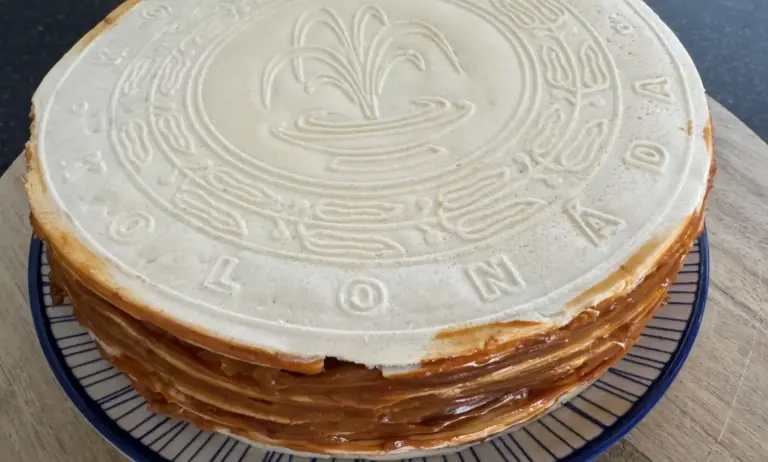
Czech Hazelnut Wafer Cake (Oplatky)
A no-bake Czech classic made with Kolonáda spa hazelnut wafers, mascarpone, dulce de leche, and walnuts. Stack, chill, and slice - the layers soften into something rich and quietly addictive.
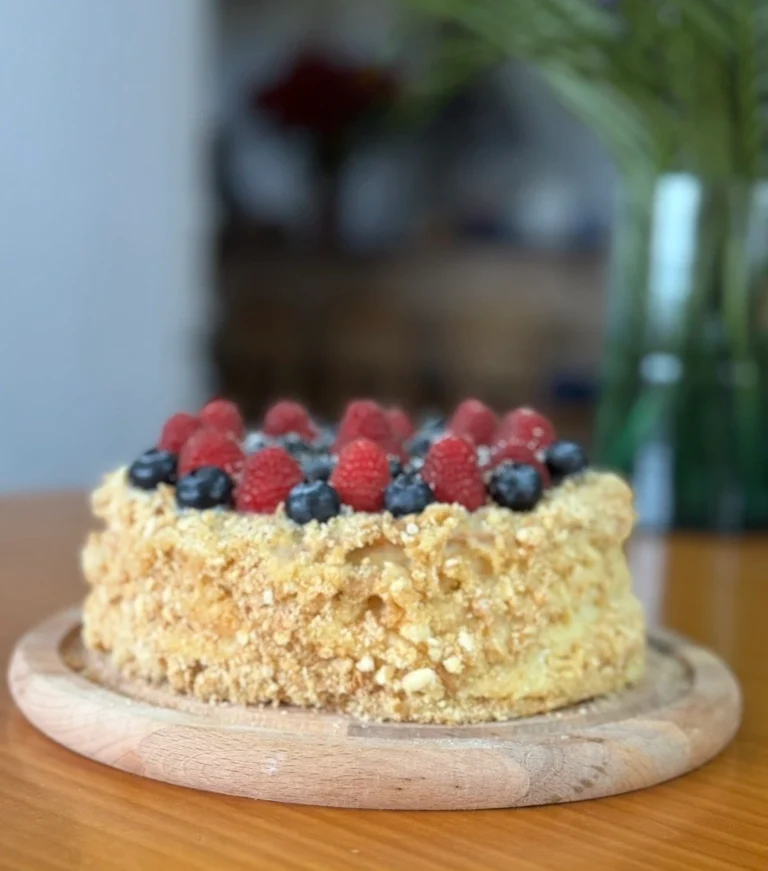
Classic Napoleon Cake (Mille-Feuille)
Dozens of paper-thin, flaky pastry layers soaked overnight in silky vanilla custard - this is the Napoleon cake from every Ukrainian grandmother's recipe box, always made the day before and always worth the wait.
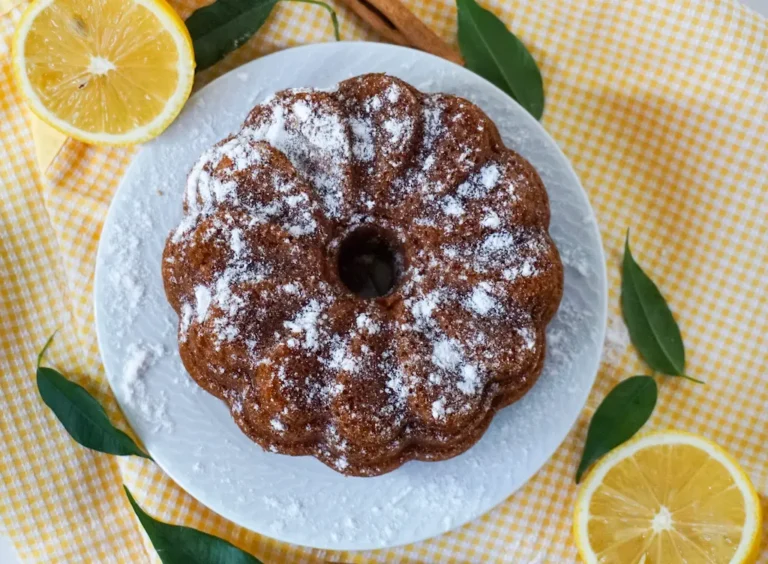
Classic Sour Cream Pound Cake
Dense, buttery, and impossibly tender - this sour cream pound cake has a fine crumb that slices cleanly and a flavour that quietly gets better on day two.
Related searches