Japanese Ramen Soup
A rich, dark soy broth with tender soy-glazed pork, a soft-boiled egg, and wavy noodles - this is shoyu ramen built from scratch using ingredients you can find at any grocery store.
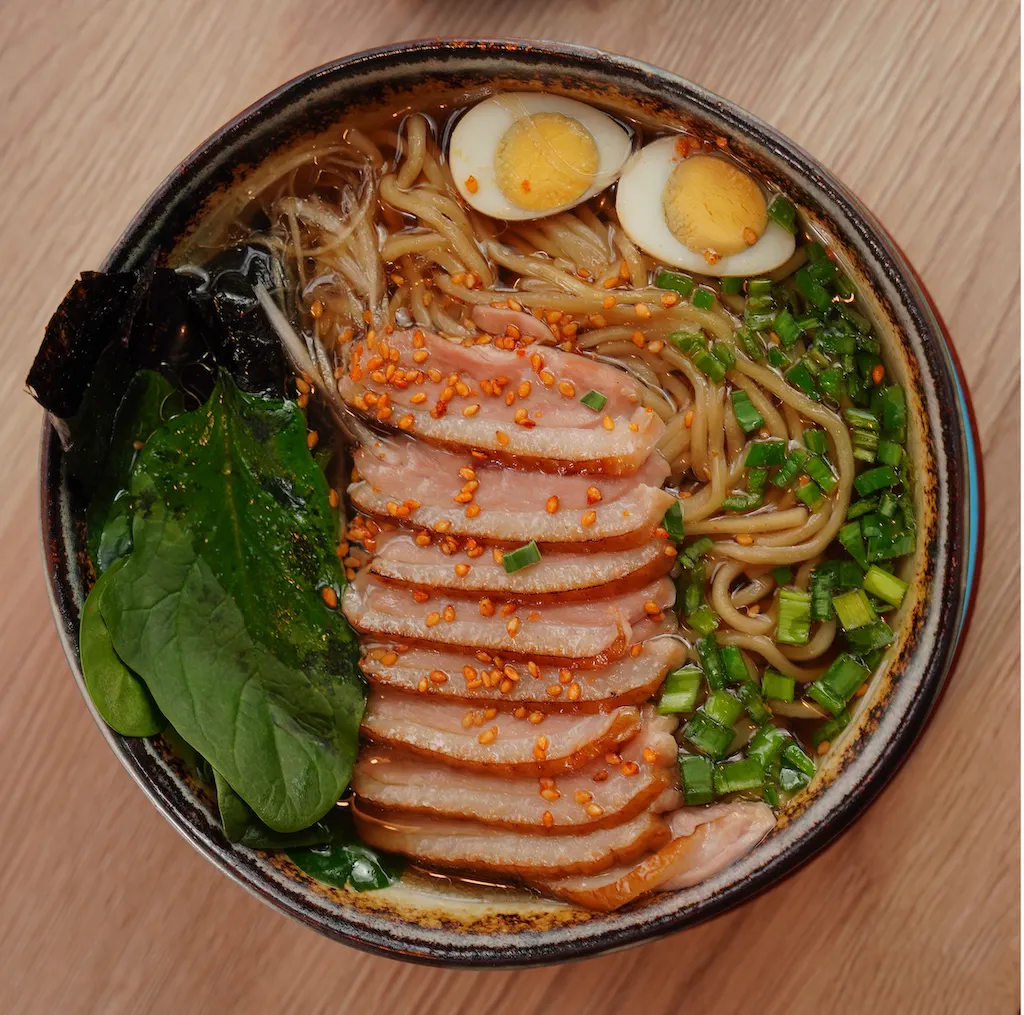
This version of shoyu ramen takes everything that makes the dish worth eating – the deeply savory soy broth, the tender pork, the soft-boiled egg – and rebuilds it using ingredients you can find at any grocery store, with techniques that do not require a full day in the kitchen. It is not a shortcut so much as a translation: the same logic and the same flavors, adjusted for a home cook who does not have access to specialty cuts or four free hours on a weeknight.
The broth starts with good-quality chicken stock rather than bones simmered from scratch. The difference is real but smaller than you might think, especially once you simmer the stock for twenty minutes with garlic, ginger, scallions, and kombu. Kombu is dried kelp, available at most well-stocked grocery stores or online, and it adds an almost invisible savory depth that is hard to replicate any other way. If you cannot find it, the broth is still very good without it. Soy sauce and a little mirin go in at the end to give it the rounded, slightly sweet-savory finish that makes shoyu ramen taste like itself.
The pork is tenderloin, sliced thin, marinated briefly in soy sauce, honey, garlic, and ginger, then seared in a hot pan for about ten minutes total. The result is caramelized, glossy slices with a flavor that works beautifully in broth. It is significantly quicker than braised pork belly and uses a cut that is available everywhere and easy to work with.
Cremini mushrooms replace the specialty varieties. They are earthy, meaty, and hold their texture well when sauteed in a hot pan with butter and garlic. The key is not crowding the pan – too many mushrooms at once means they steam rather than brown, and the difference in flavor is noticeable. Give them space and leave them alone for a full minute before stirring.
The soft-boiled egg is the one place where no real shortcut exists, and none is needed. Six and a half minutes in boiling water, straight into ice water, peeled carefully. A brief soak in soy sauce while everything else comes together seasons them without overnight planning. Halve them just before the bowl is assembled.
Ramen noodles are widely available in most supermarkets in both fresh and dried form. If you cannot find them, thin spaghetti cooked just to done is a perfectly honest substitute – slightly different in texture but still good, which is what matters.
If ramen is your entry point into broth-based cooking, Vietnamese Beef Pho Soup is the natural comparison to make – or try French Onion Soup for a Western take on the same depth-first approach.
Ingredients for Japanese Ramen Soup
- For the soy-glazed pork:
- 500 g (1.1 lbs) pork tenderloin or pork loin, sliced into thin rounds (about 5 mm thick)
- 3 tbsp soy sauce
- 1 tbsp honey
- 2 garlic cloves, minced
- 1 tsp fresh ginger, finely grated
- 1 tbsp neutral oil, for cooking
- For the soft-boiled eggs:
- 4 large eggs
- 2 tbsp soy sauce
- 2 tbsp water
- For the broth:
- 1.5 liters (6 cups) good-quality chicken stock
- 1 piece kombu, about 10x10 cm, wiped clean (optional but recommended)
- 4 garlic cloves, smashed
- 3 slices fresh ginger
- 2 scallions, halved
- 3 tbsp soy sauce
- 1 tbsp mirin or 1 tsp honey mixed with 1 tsp rice vinegar
- 1 tsp sesame oil
- Salt to taste
- For the mushrooms:
- 200 g (7 oz) cremini mushrooms (baby bella), sliced
- 1 tbsp unsalted butter
- 1 garlic clove, minced
- Salt and black pepper
- For serving:
- 4 portions fresh or dried ramen noodles, or thin spaghetti as a substitute
- 100 g (4 cups loosely packed) fresh spinach, briefly blanched
- 4 sheets nori
- 4 scallions, thinly sliced
- 1 tbsp toasted sesame seeds
- Sesame oil, for finishing
- White pepper, to taste
How to Make Japanese Ramen Soup
-
1
Combine the soy sauce, honey, minced garlic, and grated ginger in a bowl. Add the pork slices, toss to coat, and leave to marinate for at least 15 minutes while you prepare everything else.
-
2
Bring a pot of water to a full rolling boil. Lower the eggs in gently and cook for exactly 6 minutes 30 seconds. Transfer immediately to a bowl of ice water and leave for 5 minutes, then peel carefully. Place the peeled eggs in a small bowl and spoon over the soy sauce and water. Leave to sit for at least 20 minutes, turning once.
-
3
Pour the chicken stock into a pot. Add the kombu if using, smashed garlic, ginger slices, and scallions. Bring to a gentle simmer over medium heat and cook for 20 minutes - do not let it boil hard. Remove the kombu after 15 minutes so it does not turn bitter. Strain the broth through a sieve, discarding all solids. Return the broth to the pot, stir in the soy sauce, mirin, and sesame oil, and taste for salt. Keep warm over low heat.
-
4
Melt the butter in a skillet over medium-high heat. Add the cremini mushrooms in a single layer - do not crowd them - and leave without stirring for 2-3 minutes until the undersides are golden. Stir, add the minced garlic, and cook for 1 more minute. Season with salt and pepper and set aside.
-
5
Wipe out the skillet and heat the neutral oil over medium-high heat until very hot. Lift the pork slices from the marinade and cook in a single layer for 2 minutes per side until golden and just cooked through. Pour any remaining marinade into the pan in the last 30 seconds and let it glaze the pork. Remove from heat.
-
6
Cook the ramen noodles in a separate pot of boiling water according to the package instructions. Drain well.
-
7
Bring the broth to a hard boil just before assembling the bowls.
-
8
To assemble each bowl, add a portion of drained noodles. Ladle in 350-400 ml of boiling hot broth. Lay 4-5 slices of soy-glazed pork across the noodles. Halve one soy-marinated egg and place it cut-side up in the bowl. Add a handful of blanched spinach, a spoonful of sauteed cremini mushrooms, and a sheet of nori tucked against the edge. Scatter sliced scallions and sesame seeds over the top, add a few drops of sesame oil, and finish with a pinch of white pepper. Serve immediately.
Nutrition (per serving)
- Carbs 66g · 48%
- Protein 40g · 29%
- Fat 14g · 23%
Tips & FAQ
Can I use any noodles instead of ramen noodles?
How do I make the perfect soft-boiled ramen egg?
Can I make the broth ahead of time?
What is chashu pork and can I leave it out?
Why does my homemade ramen taste different from restaurant ramen?
More Soups
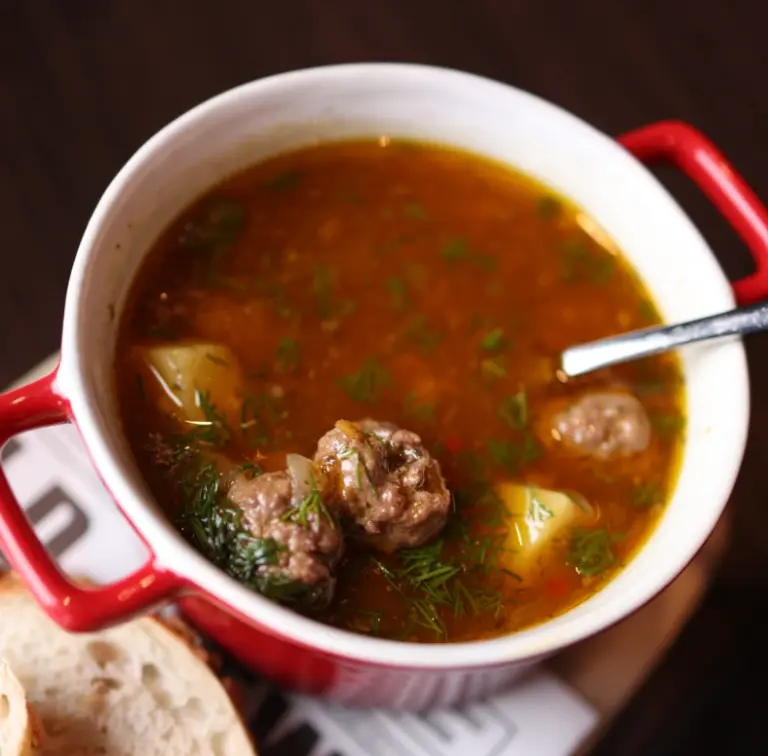
Homemade Meatball Soup with Potatoes and Fresh Dill
A hearty, clear-broth meatball soup with tender beef meatballs, potato chunks, carrots, and a generous handful of fresh dill. Simple, comforting, and ready in just over an hour.

Ukrainian Homemade Borscht Soup with Sour Cream
Classic Ukrainian borscht made with beef on the bone, beets, cabbage, potatoes, and a proper vegetable sauté that keeps the broth that deep crimson red. Served with sour cream and fresh parsley.

Spanish Salmorejo Cold Tomato Soup
Salmorejo is a thick, silky Spanish cold tomato soup from Córdoba made with just ripe tomatoes, bread, garlic, and olive oil, then topped with jamón serrano and hard-boiled egg. No cooking required.
Related searches