Vietnamese Beef Pho Soup
A crystal-clear beef broth built over hours with charred aromatics and toasted spices, served over silky rice noodles with thin slices of beef that cook the moment the hot broth hits them.
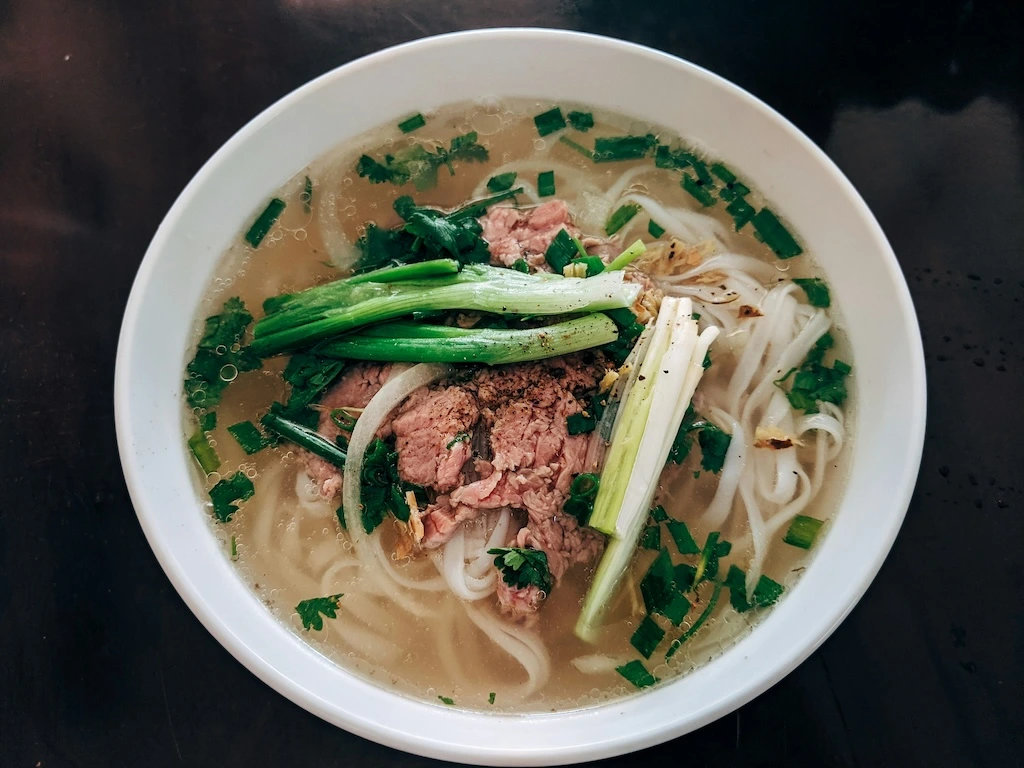
Pho is one of those dishes that rewards patience more directly than almost any other recipe. The broth – the part that everything else exists to hold together – is built from roasted bones, charred aromatics, and a small set of warm spices, simmered long enough that the collagen dissolves into the liquid and gives it that silky, slightly glossy quality. You can taste the difference between a two-hour pho and a four-hour one. The four-hour version wins every time.
Two things make pho taste like pho rather than just a spiced beef soup: charring and blooming. Charring the onion and ginger directly over a flame or under a hot broiler until they are genuinely blackened on the outside seems extreme, but it is what gives the broth its depth and that faint, caramel-like sweetness beneath the beef. Blooming the spices in a dry pan for a minute or two before adding them to the pot wakes up the star anise and cinnamon in a way that just dropping them in cold never does.
The bones need to be blanched before the long simmer. Bring them to a boil in cold water, drain everything, rinse the bones and the pot, then start again with fresh water. This removes the grey foam and impurities that would otherwise cloud the broth. Skipping this step is not a disaster, but the difference is visible – a blanched-bone broth is a clear, luminous amber; a skipped-step broth tends toward murky.
Season the finished broth with fish sauce at the very end, gradually, tasting as you go. It should be savory and just lightly salty on its own, because it gets diluted slightly when the noodles and garnishes go in.
For the raw beef, eye of round or sirloin work best because they are lean enough to slice thin and tender enough that the boiling broth cooks them through in under a minute. Slice against the grain, as thin as you can manage. Partially freezing the meat for 20 minutes before slicing makes this significantly easier and is worth doing.
The garnish plate is not optional. Bean sprouts, Thai basil, fresh lime, sliced chilies – they are not decoration. The lime cuts through the richness, the sprouts add crunch, the basil brings a fragrant anise-like note that echoes the spices in the broth. Each bowl gets finished at the table, which means everyone makes it their own. That is part of what makes pho feel generous in a way that most one-pot dishes do not.
If pho has you thinking about other long-cooked broth soups, Japanese Ramen Soup is the obvious comparison to make – or try Chicken Noodle Soup for something quicker but still built on a proper homemade stock.
Ingredients for Vietnamese Beef Pho Soup
- For the broth:
- 2 kg (4.5 lbs) beef bones, knuckle and marrow, cut by your butcher
- 500 g (1 lb) beef brisket or oxtail
- 2 large onions, halved through the root
- 1 large piece of fresh ginger (about 8 cm / 3 inches), halved lengthwise
- 4 whole star anise
- 1 cinnamon stick (about 7 cm)
- 4 whole cloves
- 1 tsp coriander seeds
- 1 tsp fennel seeds
- 3 liters (12 cups) cold water
- 3 tbsp fish sauce, plus more to taste
- 1 tbsp rock sugar or granulated sugar
- 1 tsp fine salt
- For the noodles and beef:
- 400 g (14 oz) dried flat rice noodles, medium width (banh pho)
- 300 g (10 oz) beef eye of round or sirloin, partially frozen
- For the garnish plate:
- 150 g (5 oz) fresh bean sprouts
- A handful of fresh Thai basil sprigs
- 2 limes, cut into wedges
- 2 fresh red or green chilies, thinly sliced
- Sliced scallions and fresh cilantro, for serving
- Hoisin sauce and sriracha, for serving
How to Make Vietnamese Beef Pho Soup
-
1
Place the beef bones in a large pot and cover with cold water. Bring to a rolling boil over high heat and cook for 5 minutes - the water will turn grey and foamy. Drain completely, then rinse the bones thoroughly under cold running water and scrub the pot clean.
-
2
Char the onion halves and ginger over a direct gas flame or under a hot broiler, turning occasionally, until the cut sides are deeply blackened - about 5 minutes. Set aside.
-
3
Toast the star anise, cinnamon, cloves, coriander seeds, and fennel seeds in a dry skillet over medium heat for 2-3 minutes, stirring frequently, until fragrant. Remove from heat immediately so they do not burn.
-
4
Return the blanched bones to the clean pot along with the brisket or oxtail. Pour in 3 liters of cold water and bring to a boil over high heat. Skim off any foam that rises to the surface during the first 10 minutes.
-
5
Add the charred onion, charred ginger, and toasted spices to the pot. Reduce the heat to the lowest setting - the broth should barely tremble, not actively bubble. Cook uncovered for at least 4 hours, skimming the surface once or twice during that time.
-
6
After 4 hours, remove the brisket or oxtail from the pot using tongs. Let it cool slightly, then slice thinly and set aside. Leave the bones in the pot.
-
7
Strain the entire broth through a fine-mesh sieve into a clean pot, discarding all solids. You should have about 2 liters of clear, golden broth. If you have significantly more, simmer uncovered for 20-30 minutes to concentrate it.
-
8
Season the broth with fish sauce, sugar, and salt, adding each gradually and tasting as you go. The broth should be deeply savory and just lightly salty. Keep it at a steady simmer while you prepare everything else.
-
9
Slice the partially frozen raw beef against the grain as thinly as possible - almost translucent slices are ideal. Arrange on a plate and keep chilled until ready to serve.
-
10
Soak the dried rice noodles in cold water for 20 minutes. Drain, then cook in a separate pot of boiling water for 1-2 minutes until just tender but still with a little bite. Drain and divide among six large bowls.
-
11
Lay a few slices of raw beef over the noodles in each bowl, along with a few slices of the cooked brisket if using.
-
12
Bring the broth to a vigorous rolling boil - it must be at a full boil, not just hot, so that it cooks the raw beef the moment it lands in the bowl. Ladle the boiling broth generously over the beef and noodles in each bowl.
-
13
Serve immediately, with the garnish plate of bean sprouts, Thai basil, lime wedges, sliced chilies, scallions, cilantro, hoisin sauce, and sriracha alongside. Each person adds their own at the table.
Nutrition (per serving)
- Carbs 52g · 40%
- Protein 38g · 29%
- Fat 18g · 31%
Tips & FAQ
Why does my pho broth taste flat compared to restaurant pho?
Can I use chicken or vegetable stock as a shortcut?
How thin should I slice the beef for pho?
What herbs and garnishes are traditional?
Can I make pho without a slow cooker or pressure cooker?
More Soups
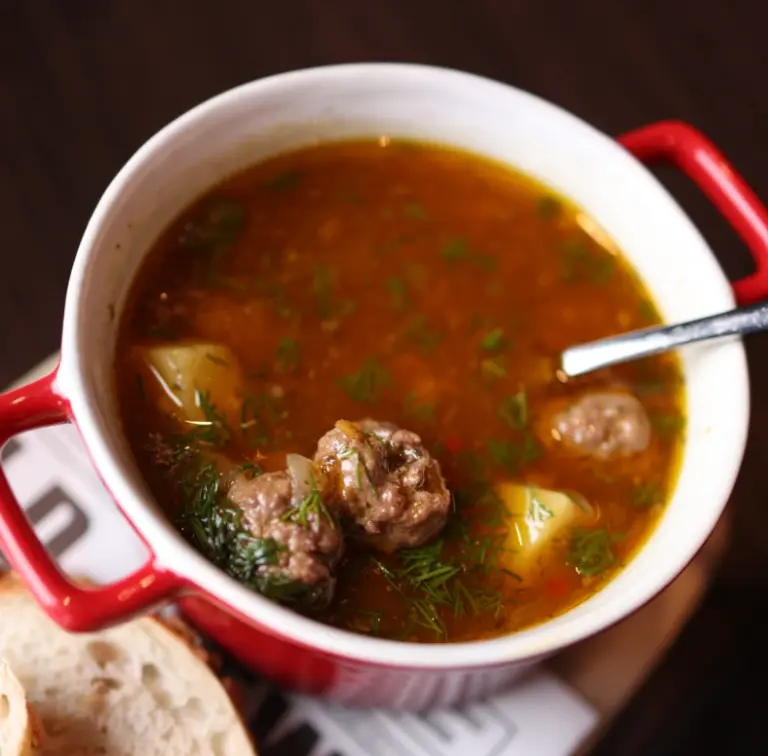
Homemade Meatball Soup with Potatoes and Fresh Dill
A hearty, clear-broth meatball soup with tender beef meatballs, potato chunks, carrots, and a generous handful of fresh dill. Simple, comforting, and ready in just over an hour.
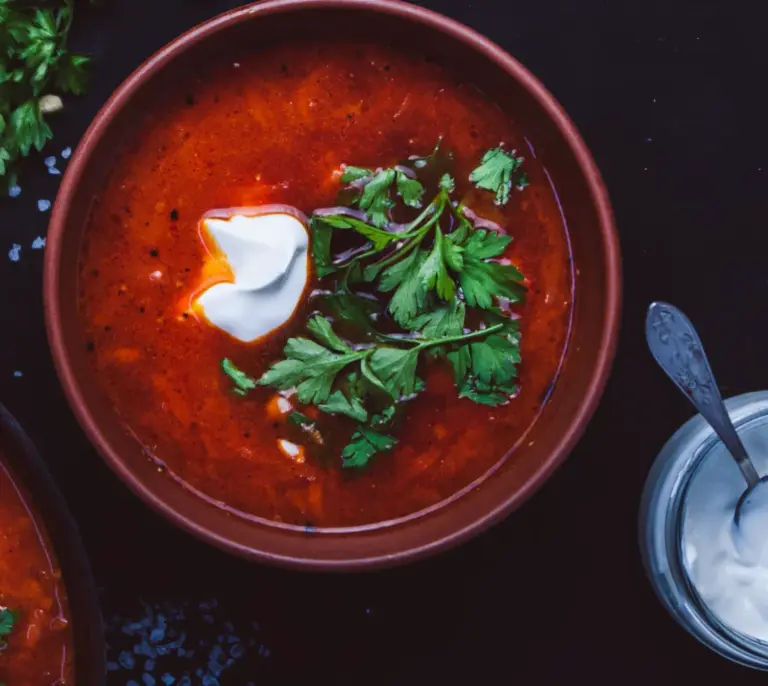
Ukrainian Homemade Borscht Soup with Sour Cream
Classic Ukrainian borscht made with beef on the bone, beets, cabbage, potatoes, and a proper vegetable sauté that keeps the broth that deep crimson red. Served with sour cream and fresh parsley.
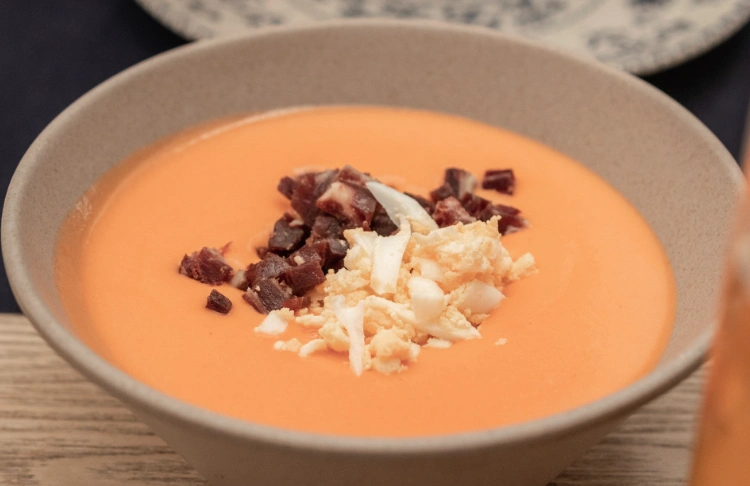
Spanish Salmorejo Cold Tomato Soup
Salmorejo is a thick, silky Spanish cold tomato soup from Córdoba made with just ripe tomatoes, bread, garlic, and olive oil, then topped with jamón serrano and hard-boiled egg. No cooking required.
Related searches