Classic Spaghetti Bolognese
A rich, slow-simmered meat sauce built on a proper soffritto, deepened with red wine and crushed tomatoes, finished with fresh basil and melted mozzarella - the kind of bolognese that rewards every extra minute you give it.
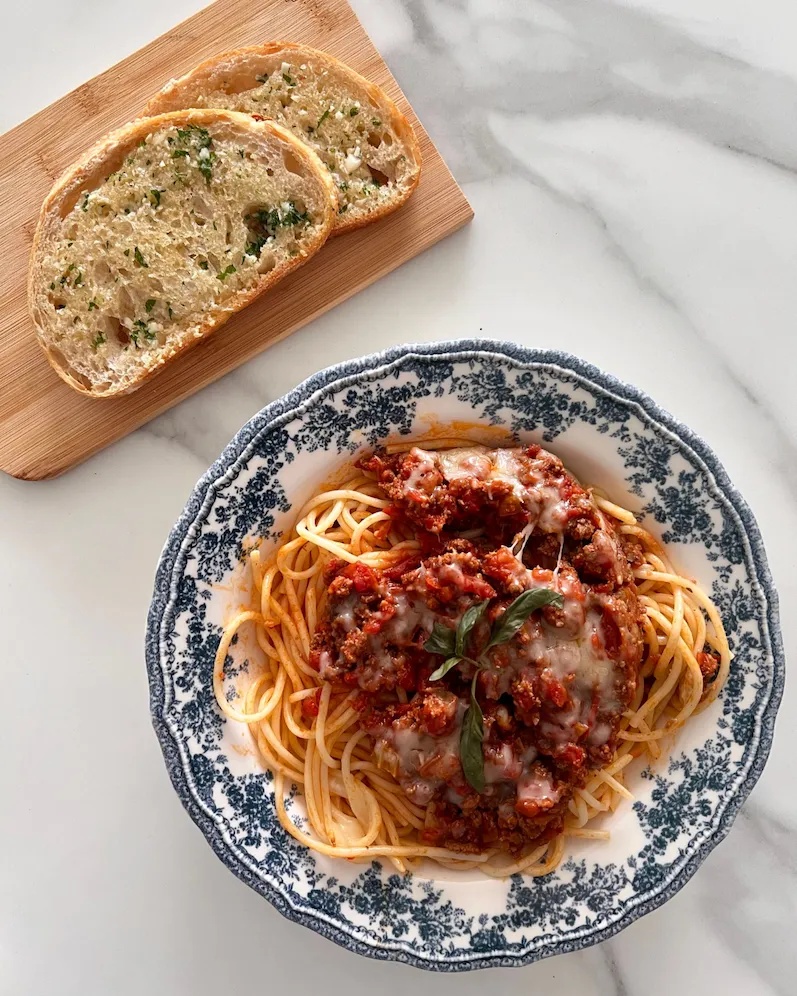
A bolognese sauce has one real requirement: time. The soffritto needs to soften properly. The meat needs to brown genuinely, not just lose its pink color in its own steam. The wine needs time to cook out. And the sauce itself needs at least an hour of unhurried simmering before it becomes something worth eating. Everything about the recipe is straightforward. The only thing it costs is patience.
Start with the soffritto – finely diced onion, carrot, and celery cooked slowly in olive oil until soft and sweet. This takes about ten minutes and is the flavor foundation of everything that follows. Rushing it means a flat sauce; doing it properly means depth even before the meat or tomatoes go in.
The meat goes in next, and it needs to genuinely brown – not just change color, but develop real caramelization on the surface. For this to happen, the pan needs to be hot enough and the meat needs room to sear rather than steam. If your pan is small, brown the meat in two batches. A layer of grey, steamed mince and a layer of properly browned mince are two different things in a sauce, and you can taste the difference in the finished bowl.
Red wine goes in after the meat is browned and before the tomatoes, scraping up all the caramelized bits from the bottom of the pan. Let it bubble and reduce until almost completely evaporated before the tomatoes go in. This step builds flavor and ensures no harsh raw wine taste in the finished sauce.
One hour of simmering is a minimum. Ninety minutes is better. During this time the sauce changes: it deepens in color, tightens in consistency, and the separate elements – the meat, the tomatoes, the aromatics – merge into something cohesive and rich. Stir it every fifteen minutes and add a splash of water if it reduces too fast.
Cook the spaghetti in well-salted boiling water until just short of done, then finish it in the sauce with a ladle of starchy pasta water. This step binds the sauce to the noodles rather than leaving a pool of sauce sitting on top of plain pasta – a small difference that changes how the whole dish eats.
Fresh basil and melted mozzarella finish the bowl. The heat of the pasta softens the cheese into creamy, mild pools that balance the acidity of the tomatoes and the richness of the meat.
If Bolognese is your weeknight anchor, Classic Lasagna is where to take that same sauce on a weekend – or try Carbonara Pasta if you want something quick with a completely different kind of richness.
Ingredients for Classic Spaghetti Bolognese
- For the bolognese sauce:
- 2 tbsp olive oil
- 1 medium onion, finely diced
- 2 medium carrots, peeled and finely diced
- 2 celery stalks, finely diced
- 4 garlic cloves, minced
- 500 g (1.1 lbs) ground beef (80/20 fat ratio, or a mix of beef and pork)
- 150 ml (2/3 cup) dry red wine
- 2 tbsp tomato paste
- 400 g (14 oz) can crushed tomatoes
- 400 g (14 oz) can tomato passata
- 1 tsp dried oregano
- 1 tsp granulated sugar
- 2 bay leaves
- Salt and black pepper, to taste
- A small handful of fresh basil leaves, plus more for serving
- For the pasta:
- 400 g (14 oz) spaghetti
- 1 tbsp fine salt, for the pasta water
- For serving:
- 150 g (5 oz) fresh mozzarella, torn
- Fresh basil leaves
- Grated Parmesan, optional
How to Make Classic Spaghetti Bolognese
-
1
Heat the olive oil in a large heavy-bottomed pot or Dutch oven over medium heat. Add the diced onion, carrot, and celery and cook, stirring occasionally, for 10 minutes until very soft, sweet, and the onion is fully translucent. Add the minced garlic and cook for 1 more minute.
-
2
Increase the heat to medium-high. Add the ground beef and break it up with a wooden spoon. Let the bottom layer sit without stirring for 2-3 minutes to develop real color, then stir and continue cooking until the meat is deeply browned throughout with no pink remaining - about 8-10 minutes total. If the meat releases a lot of liquid, let it evaporate completely before moving on.
-
3
Pour in the red wine and stir vigorously, scraping up all the browned bits from the bottom of the pot. Let the wine bubble and reduce until almost completely evaporated, about 4-5 minutes.
-
4
Add the tomato paste and stir to coat the meat. Cook for 1-2 minutes until it darkens slightly. Add the crushed tomatoes, passata, dried oregano, sugar, bay leaves, a generous pinch of salt, and plenty of black pepper. Stir well and bring to a gentle simmer.
-
5
Reduce the heat to the lowest possible setting. Simmer the sauce uncovered for 60-90 minutes, stirring every 15 minutes. It should barely bubble at the surface. Add a splash of water if the sauce reduces too quickly. The sauce is ready when it is thick, deeply colored, and slightly oily on the surface. Remove the bay leaves, stir in the fresh basil, and taste for salt and pepper.
-
6
About 15 minutes before the sauce is ready, bring a large pot of water to a boil and add the salt. Cook the spaghetti according to package instructions until 2 minutes short of the stated time - it will finish in the sauce. Before draining, scoop out a large mugful of pasta cooking water.
-
7
Add the drained spaghetti directly to the sauce along with a generous ladle of pasta water. Toss and stir over medium heat for 1-2 minutes until the pasta is fully cooked, the sauce is clinging to every strand, and the water has been absorbed. Add more pasta water if the sauce is too thick.
-
8
Divide among bowls. Lay torn fresh mozzarella over each portion - the heat of the pasta will soften it into the sauce. Finish with fresh basil leaves and serve immediately with Parmesan on the side if you like.
Nutrition (per serving)
- Carbs 80g · 45%
- Protein 40g · 22%
- Fat 26g · 33%
Tips & FAQ
How long should Bolognese simmer?
Is milk supposed to go in Bolognese?
What is the difference between Bolognese and a regular meat sauce?
Can I use lean mince for Bolognese?
Do I have to use spaghetti, or can I use other pasta?
More Pasta
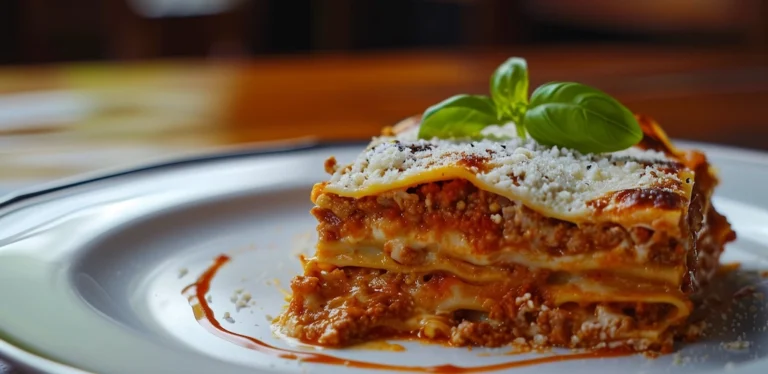
Classic Lasagna
Layers of slow-simmered meat ragù, silky béchamel, mozzarella, and pasta sheets topped with a golden, deeply bubbling cheese crust - this is proper lasagna, built from scratch and worth every step.
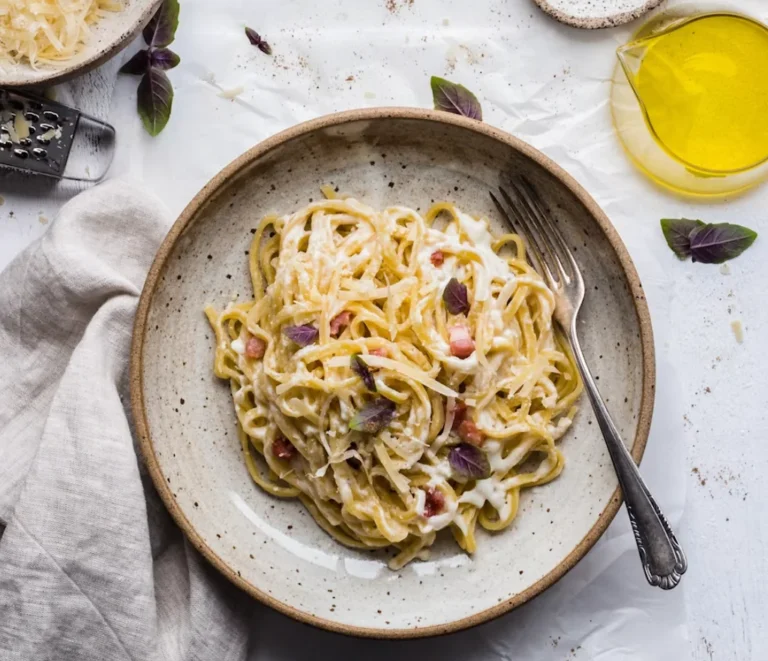
Authentic Carbonara Pasta (No Cream)
A genuinely silky carbonara made entirely without cream - just eggs, Pecorino, Parmesan, guanciale or pancetta, and starchy pasta water doing exactly what it is supposed to do. Twenty minutes, four ingredients, one technique worth learning properly.
Related searches