Authentic Carbonara Pasta (No Cream)
A genuinely silky carbonara made entirely without cream - just eggs, Pecorino, Parmesan, guanciale or pancetta, and starchy pasta water doing exactly what it is supposed to do. Twenty minutes, four ingredients, one technique worth learning properly.
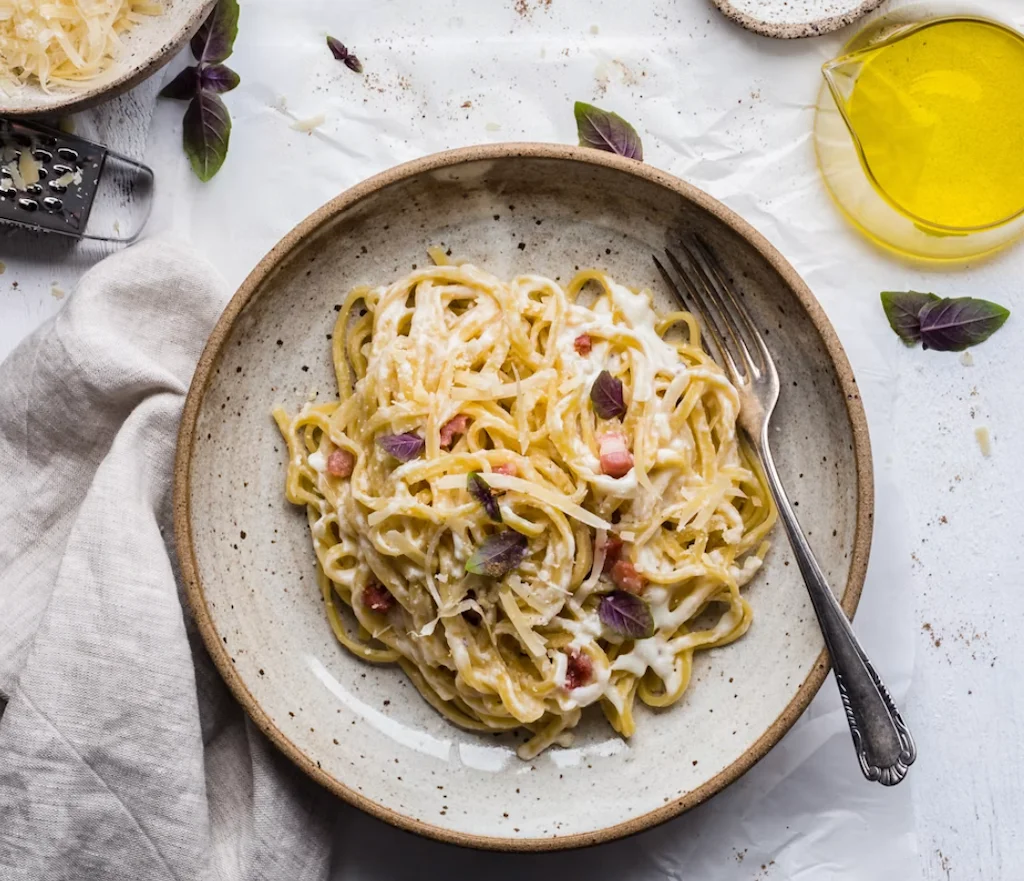
Carbonara is one of the most misunderstood pasta dishes in the world, and the misunderstanding almost always takes the same form: cream. Real carbonara has no cream, no crème fraiche, no milk, and no shortcuts of that kind. The sauce is made from eggs, finely grated aged cheese, and starchy pasta water – and those three things, combined correctly with pasta that is hot enough to warm the eggs but not hot enough to scramble them, produce something far silkier and more complex than any cream sauce.
The pork in an authentic carbonara is guanciale – cured pork cheek, which is fattier and more yielding than pancetta and has a gentler, slightly sweeter flavor when rendered slowly. Guanciale is now available at most Italian delis and a growing number of supermarkets, but pancetta is a widely acceptable substitute. Do not use regular smoked bacon: the smokiness competes with the egg and cheese rather than working alongside them.
The egg mixture is the technical center of the recipe. Whole eggs and extra yolks are beaten with very finely grated cheese until smooth. Finely grated is not optional – coarsely grated or pre-packaged cheese will not dissolve cleanly into the sauce, and you will end up with lumps of melted cheese rather than a smooth, uniform coating. A fine microplane or the smallest holes on a box grater are what you need.
The critical moment is adding the egg mixture to the pasta. The pasta must be hot enough to gently cook the eggs into a sauce, but not so hot that it scrambles them. The way to control this is simple: pull the pan off the heat before the eggs go in, toss vigorously while adding pasta water a little at a time, and never return the pan to high heat after the eggs have been added. The whole process takes about two minutes of active, attentive tossing.
Pasta water is not an afterthought – it is the ingredient that makes the sauce possible. The starch in the water emulsifies the fat from the eggs and the rendered guanciale into a uniform, glossy coating. Save at least a full cup before draining, more if you can. You will use most of it.
Black pepper is the other defining element and should be freshly ground and generous. This is one of the few dishes where pepper functions as a flavor rather than a background seasoning. Toast whole peppercorns in a dry pan first if you can – it makes a real difference to the result in the bowl.
If you love pasta with a rich, egg-based sauce, try Classic Lasagna for the same approach built in layers – or Spaghetti Bolognese Pasta if you want a slow-cooked tomato version instead.
Ingredients for Authentic Carbonara Pasta (No Cream)
- 400 g (14 oz) spaghetti or linguine
- 150 g (5 oz) guanciale or pancetta, cut into small lardons or cubes
- 3 large eggs, at room temperature
- 3 large egg yolks, at room temperature
- 80 g (about 1 cup) Pecorino Romano, very finely grated, plus more to serve
- 40 g (about 1/2 cup) Parmesan, very finely grated
- 1 tsp whole black peppercorns, toasted and freshly ground, plus more to finish
- Fine salt, for the pasta water
How to Make Authentic Carbonara Pasta (No Cream)
-
1
Toast the peppercorns in a dry skillet over medium heat for 1-2 minutes until fragrant. Grind coarsely and set aside.
-
2
In a large bowl, whisk together the whole eggs, egg yolks, finely grated Pecorino, and Parmesan until completely smooth. Add about half the ground pepper and whisk again. Set aside at room temperature - cold eggs will seize when they hit the pasta.
-
3
Place the guanciale or pancetta in a cold large skillet and set over medium-low heat. Cook slowly, stirring occasionally, for 8-10 minutes until the fat has fully rendered and the pieces are golden and just crisp at the edges. Remove from the heat but leave all the rendered fat in the pan.
-
4
Bring a large pot of water to a boil and salt it generously - the water should taste pleasantly salty. Cook the spaghetti or linguine according to the package instructions until 2 minutes short of al dente.
-
5
Before draining, scoop out at least 1 cup (240 ml) of pasta cooking water and set it beside the stove - you will need it very soon.
-
6
Drain the pasta and add it immediately to the skillet with the guanciale and its fat. Set the skillet over medium-low heat and toss for 1 minute to coat the pasta in the rendered fat and finish cooking it.
-
7
Remove the skillet from the heat entirely and let it sit for 30 seconds - this single pause is what prevents scrambled eggs. Pour the egg and cheese mixture over the pasta and toss vigorously and continuously, adding the reserved pasta water in small splashes (2-3 tablespoons at a time). Keep tossing and adding water until the sauce is silky, glossy, and clings evenly to every strand. This takes about 2 minutes. If the sauce is too thick, add more pasta water. If it seems thin, keep tossing - it will tighten as the cheese melts fully.
-
8
Divide among warm bowls immediately. Finish each portion with extra ground black pepper and a generous amount of grated Pecorino. Serve at once - carbonara does not wait.
Nutrition (per serving)
- Carbs 70g · 42%
- Protein 35g · 21%
- Fat 28g · 38%
Tips & FAQ
Why did my eggs scramble instead of making a sauce?
Is it safe to eat eggs in carbonara?
What is the difference between guanciale, pancetta, and bacon here?
Why no cream in this recipe?
How much pasta water should I use?
More Pasta
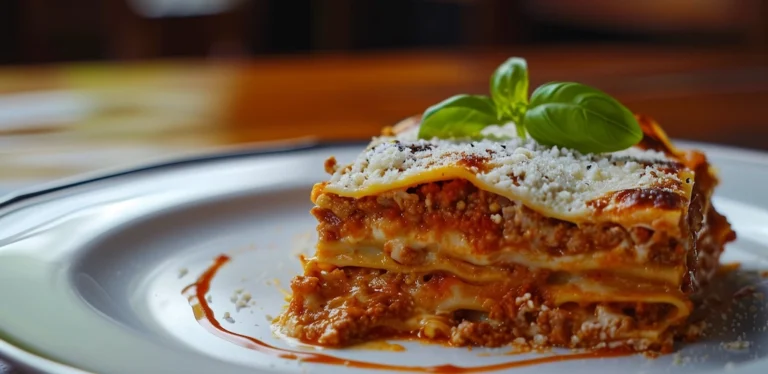
Classic Lasagna
Layers of slow-simmered meat ragù, silky béchamel, mozzarella, and pasta sheets topped with a golden, deeply bubbling cheese crust - this is proper lasagna, built from scratch and worth every step.
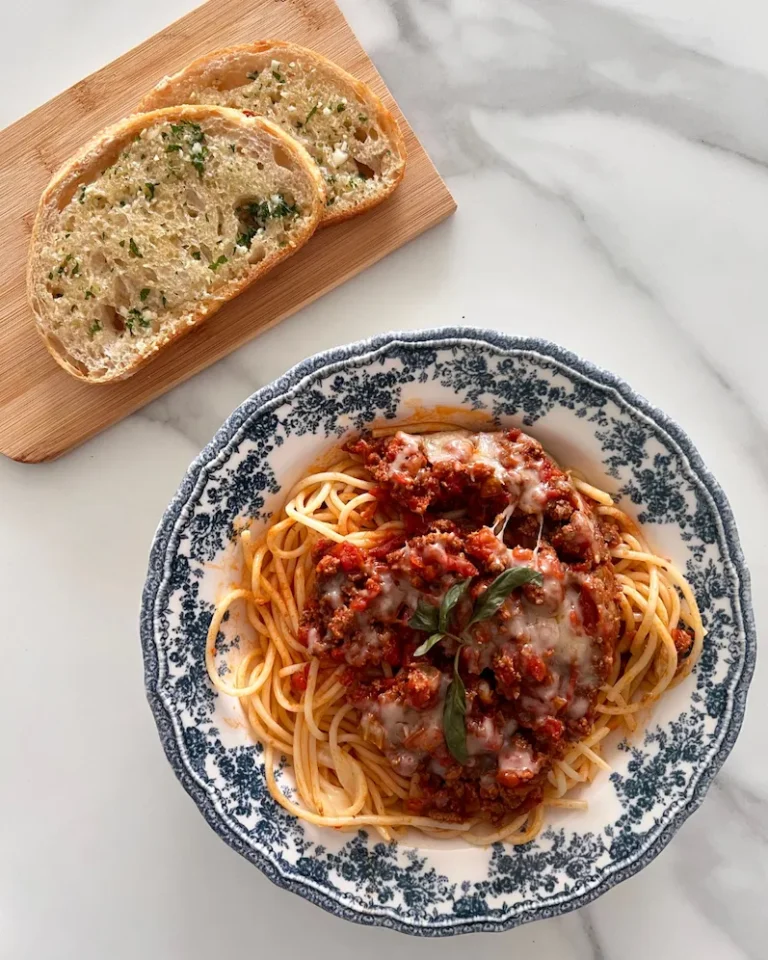
Classic Spaghetti Bolognese
A rich, slow-simmered meat sauce built on a proper soffritto, deepened with red wine and crushed tomatoes, finished with fresh basil and melted mozzarella - the kind of bolognese that rewards every extra minute you give it.
Related searches