Classic Lasagna
Layers of slow-simmered meat ragù, silky béchamel, mozzarella, and pasta sheets topped with a golden, deeply bubbling cheese crust - this is proper lasagna, built from scratch and worth every step.
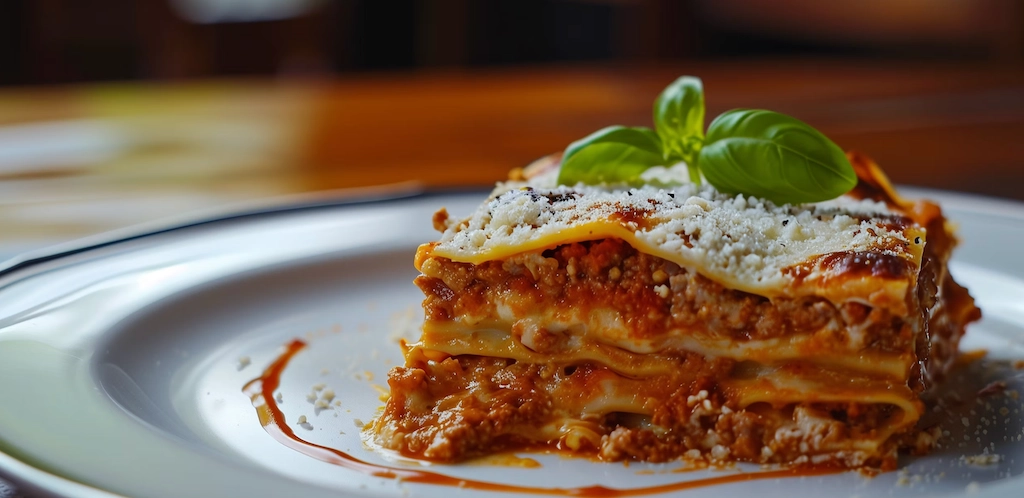
Lasagna is three separate recipes assembled into one dish, and the quality of the result is determined almost entirely by how much care goes into each of the three. A rushed ragù and a thin béchamel will produce a serviceable lasagna. A slow ragù and a properly made béchamel will produce something genuinely different – the kind of dish people ask about before they have finished their first piece.
The ragù is a meat sauce cooked long enough that the liquid has reduced, the fat has risen, and the separate elements – the meat, the aromatics, the tomato – have merged into something cohesive. The same principles that make a good bolognese apply here: brown the meat properly, let the wine evaporate fully, and give the sauce at least an hour of gentle simmering. For lasagna specifically, the ragù should stay slightly looser than you would serve over pasta, because it will tighten further in the oven. A ragù that looks a little too saucy in the pot is about right for layering.
The béchamel is not a shortcut and not optional. It is the ingredient that binds the lasagna, keeps the pasta sheets from drying out in the oven, and provides the creamy counterpoint to the acidity of the tomato sauce. Making it takes about fifteen minutes. You cook butter and flour together until the raw flour smell is gone, then add warm milk gradually while whisking until the sauce is smooth and thick enough to coat the back of a spoon. Season it with salt, white pepper, and a small grating of nutmeg – nutmeg in béchamel is traditional and makes a real difference.
The layering goes: a thin smear of béchamel on the bottom of the dish first (this prevents sticking), then pasta, ragù, béchamel, cheese, pasta, ragù, béchamel, cheese – repeated for at least four full layers. The top layer is pasta covered with béchamel and Parmesan, which forms the golden crust.
The most common mistake with lasagna is not the ragù or the béchamel but what happens after the oven. Lasagna must rest for at least 15-20 minutes before being cut. Straight from the oven the layers are soft and the sauces are still liquid – slices collapse and spread. After resting, everything sets and holds its shape cleanly. This is not optional if you want proper portions.
Lasagna is also one of the few dishes that is genuinely better the next day, reheated in a moderate oven covered with foil. The flavors deepen overnight and the layers firm up into something even more cohesive. It is a good argument for making it the day before you need it.
If you are in a pasta mood, Spaghetti Bolognese Pasta uses a similar slow-cooked meat sauce in one pan – or there is Carbonara Pasta if you want something quick but just as satisfying.
Ingredients for Classic Lasagna
- For the meat ragù:
- 2 tbsp olive oil
- 1 medium onion, finely diced
- 2 medium carrots, peeled and finely diced
- 2 celery stalks, finely diced
- 4 garlic cloves, minced
- 400 g (14 oz) ground beef
- 200 g (7 oz) ground pork
- 150 ml (2/3 cup) dry red wine
- 2 tbsp tomato paste
- 2 x 400 g (14 oz) cans crushed tomatoes
- 1 tsp dried oregano
- 1 tsp granulated sugar
- 2 bay leaves
- Salt and black pepper, to taste
- For the béchamel:
- 60 g (4 tbsp) unsalted butter
- 60 g (1/2 cup) all-purpose flour
- 750 ml (3 cups) whole milk, warmed
- 1/4 tsp freshly grated nutmeg
- Salt and white pepper, to taste
- For assembly:
- 12-14 dried lasagna sheets (or fresh lasagna sheets)
- 200 g (7 oz) low-moisture mozzarella, coarsely grated or torn
- 80 g (about 1 cup) Parmesan, finely grated
- Fresh basil leaves, for garnish
How to Make Classic Lasagna
-
1
Heat the olive oil in a large heavy-bottomed pot over medium heat. Add the onion, carrot, and celery and cook, stirring occasionally, for 10 minutes until completely soft and the onion is translucent. Add the garlic and cook for 1 more minute.
-
2
Increase the heat to medium-high. Add the ground beef and pork, breaking up the meat with a wooden spoon. Cook until deeply browned throughout with no pink remaining - about 10 minutes. Let any liquid that releases evaporate completely before moving on.
-
3
Pour in the red wine and stir to deglaze, scraping up the browned bits from the bottom. Let it bubble and reduce until almost completely evaporated, about 4-5 minutes.
-
4
Add the tomato paste and stir to coat the meat, cooking for 1-2 minutes. Add the crushed tomatoes, dried oregano, sugar, bay leaves, salt, and plenty of black pepper. Stir well and bring to a gentle simmer. Reduce heat to the lowest setting and cook uncovered for 60-75 minutes, stirring every 15 minutes, until the ragù is thick but still slightly saucy. Remove the bay leaves and taste for seasoning.
-
5
While the ragù finishes, make the béchamel. Melt the butter in a medium saucepan over medium heat. Add the flour and whisk constantly for 2 minutes until the raw flour smell has gone. Begin adding the warm milk a ladleful at a time, whisking vigorously after each addition. Once all the milk is in, cook for a further 5 minutes, whisking often, until the sauce is smooth and thick enough to coat the back of a spoon. Season with salt, white pepper, and nutmeg. Set aside.
-
6
If using dried lasagna sheets that require pre-cooking, cook them in well-salted boiling water for 2 minutes less than the package states. Drain and lay flat in a single layer on a clean kitchen towel. No-boil sheets can go in dry.
-
7
Preheat your oven to 190°C (375°F).
-
8
Spread a thin layer of béchamel across the bottom of a 9x13 inch (23x33 cm) baking dish. Lay a layer of pasta sheets over it, trimming to fit. Spread a generous, even layer of ragù over the pasta, then spoon over a layer of béchamel. Scatter a handful of mozzarella and a spoonful of Parmesan. Repeat the layering - pasta, ragù, béchamel, mozzarella, Parmesan - for at least 4 layers, using all of the ragù.
-
9
For the final layer, place pasta sheets on top and cover completely with the remaining béchamel. Scatter the remaining mozzarella and Parmesan generously over the surface.
-
10
Cover the dish tightly with aluminum foil and bake for 30 minutes. Remove the foil and bake for a further 15-20 minutes until the top is golden, bubbling, and darkly caramelized at the edges.
-
11
Remove from the oven and rest uncovered for 15-20 minutes before cutting - this step is not optional. The layers need time to set so the portions hold their shape. Garnish with fresh basil and serve.
Nutrition (per serving)
- Carbs 44g · 29%
- Protein 32g · 21%
- Fat 33g · 49%
Tips & FAQ
Do I need to pre-cook the pasta sheets?
Why is my lasagna watery?
Can I assemble lasagna the day before and bake it the next day?
How do I stop the top from drying out?
Can I freeze lasagna?
More Pasta
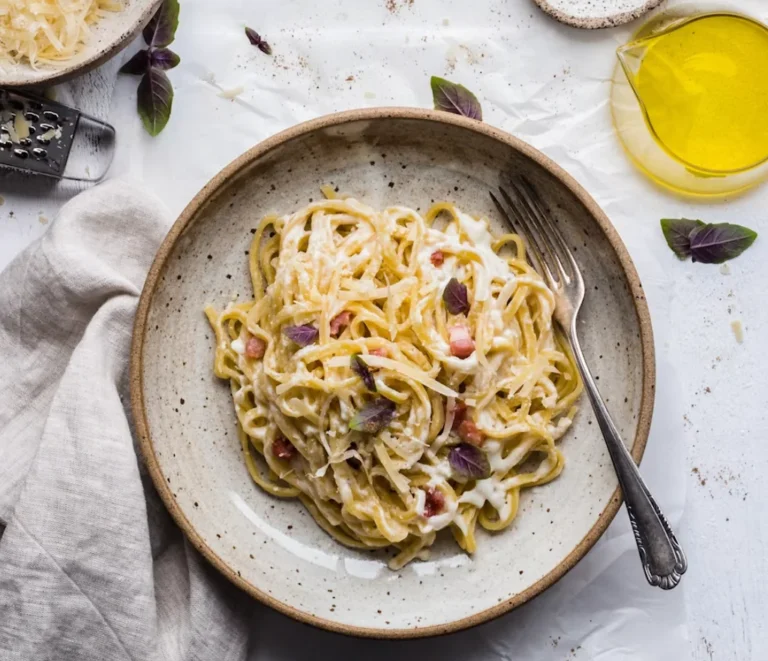
Authentic Carbonara Pasta (No Cream)
A genuinely silky carbonara made entirely without cream - just eggs, Pecorino, Parmesan, guanciale or pancetta, and starchy pasta water doing exactly what it is supposed to do. Twenty minutes, four ingredients, one technique worth learning properly.
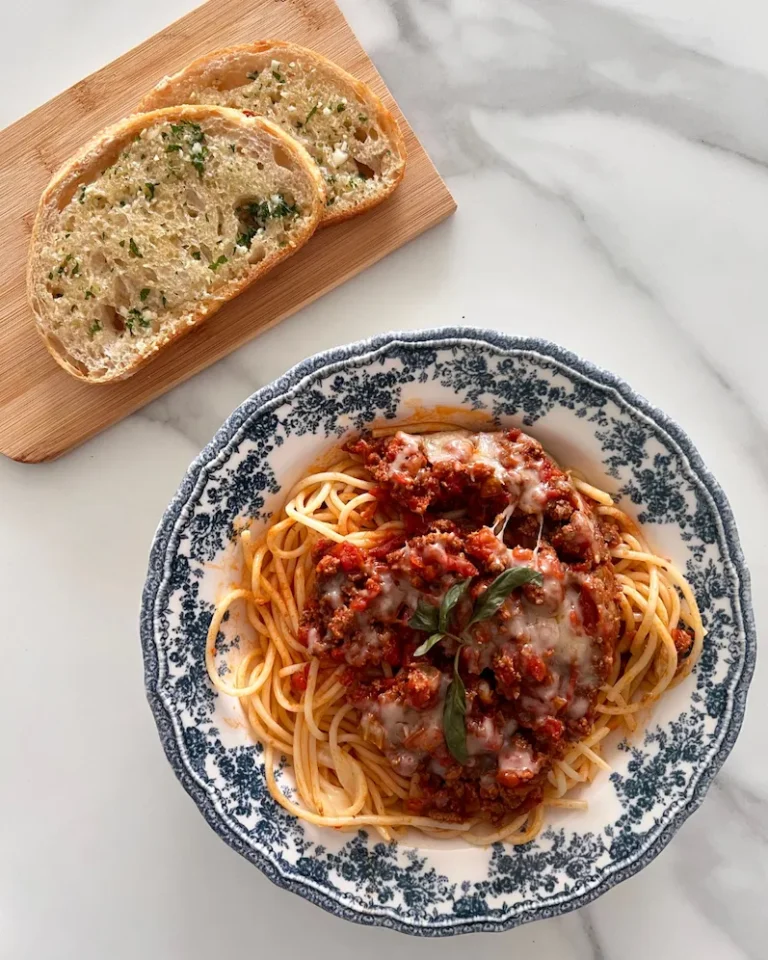
Classic Spaghetti Bolognese
A rich, slow-simmered meat sauce built on a proper soffritto, deepened with red wine and crushed tomatoes, finished with fresh basil and melted mozzarella - the kind of bolognese that rewards every extra minute you give it.
Related searches