Taiwanese Braised Beef Noodle Soup
Taiwanese braised beef noodle soup with tender beef shank, thick wheat noodles, and a rich, fragrant dark soy broth spiced with star anise, cinnamon, and doubanjiang. A proper bowl worth the time it takes.
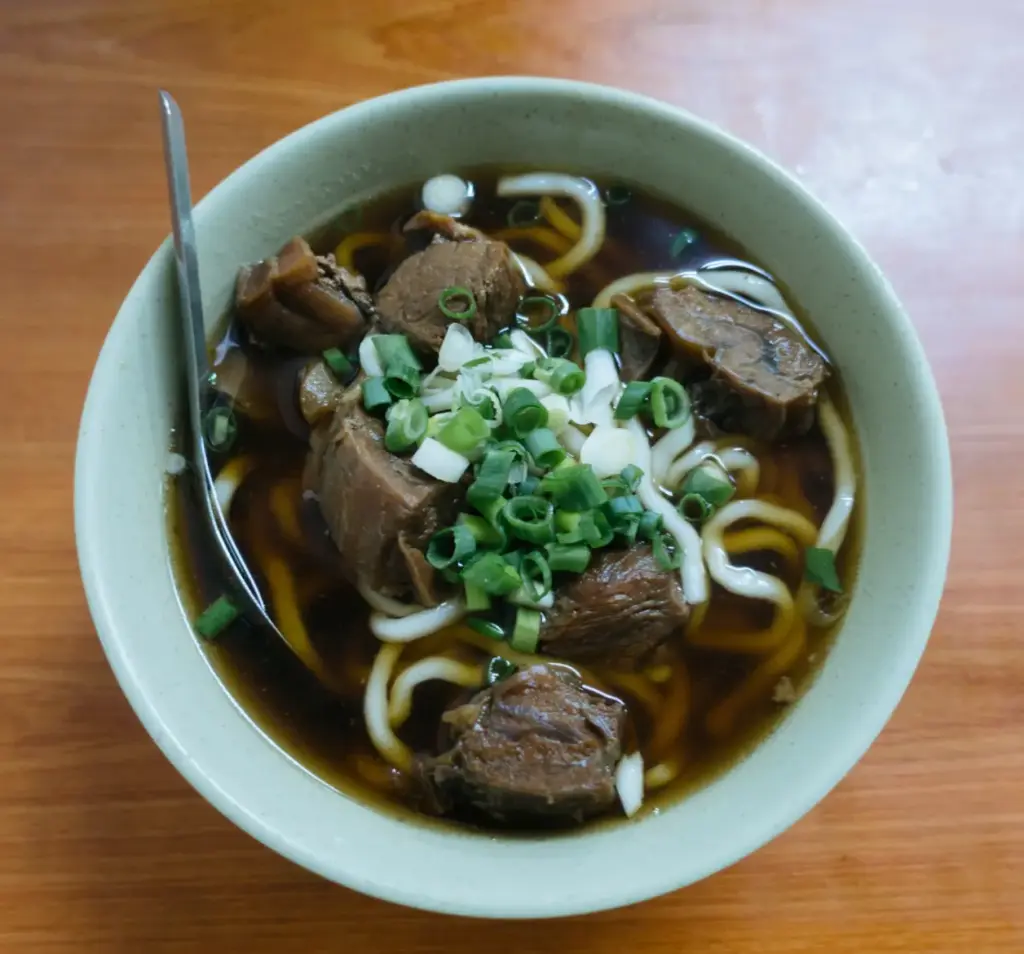
Taiwanese beef noodle soup is one of the most revered noodle dishes in all of East Asia, and it earns that reputation. The broth is built over several hours from braised beef shank, a generous amount of aromatics, and a combination of soy sauce and dark soy sauce that gives it the deep, mahogany color you see in the bowl. The beef is cooked until it is genuinely tender – not merely done, but falling-apart soft, still holding its shape in the spoon but offering almost no resistance when eaten. The noodles go in thick and chewy, and they absorb the broth with every bite. It is the kind of meal that makes you understand why a city like Taipei has entire restaurants dedicated to this one dish.
The foundation of the broth is the aromatics: fresh ginger and garlic, green onion, star anise, cinnamon, and a tablespoon or two of doubanjiang – a fermented spicy bean paste from Sichuan that adds a deep, fermented heat and complexity that nothing else quite replicates. If you want a milder version, use half the amount or skip it entirely and add a teaspoon of regular miso paste instead. The broth will be different but still very good.
The blanching step at the start is not optional. It removes impurities and blood from the beef that would otherwise cloud the broth and give it an off flavor. Five minutes in boiling water, a rinse, and a pat dry before searing – this is what makes the final broth clear and clean-tasting despite being so intensely colored and flavored. Sear the beef properly before braising too. Dark color on the surface of the meat equals flavor in the broth.
The braise takes about two hours at a low, patient simmer – not a boil. A hard boil will tighten the meat rather than relax it. You are looking for small, lazy bubbles breaking the surface occasionally, and a lid on for most of the cook time.
For a completely different noodle soup from Europe, our Tortellini Soup with Sausage and Spinach follows the same idea of a deeply flavored broth built first, with pasta added at the end. And if you enjoy Asian broths with depth and restraint, our Japanese Miso Soup takes the opposite approach – fewer ingredients, no long braise, and a broth that comes together in minutes.
Ingredients for Taiwanese Braised Beef Noodle Soup
- For the braised beef:
- 1.2 kg (2.6 lb) beef shank or beef chuck, cut into large chunks (5-6 cm / 2 inches)
- 2 tablespoons vegetable oil
- 6 garlic cloves, smashed
- 5 cm (2 inch) piece fresh ginger, sliced into coins
- 4 green onions, cut into 5 cm (2 inch) pieces
- 2 tablespoons doubanjiang (spicy fermented bean paste)
- 3 tablespoons soy sauce
- 2 tablespoons dark soy sauce
- 2 tablespoons Shaoxing rice wine (or dry sherry)
- 1 tablespoon sugar
- 3 whole star anise
- 1 cinnamon stick
- 3 bay leaves
- 2 dried red chilies (optional)
- 1.5 liters (6 cups) beef broth
- 250ml (1 cup) water
- For serving:
- 480g (17 oz) fresh thick wheat noodles or udon noodles
- 5 green onions, thinly sliced
- Chili oil (optional)
How to Make Taiwanese Braised Beef Noodle Soup
-
1
Bring a large pot of unsalted water to a full boil (100°C / 212°F). Add the beef chunks and blanch for 5 minutes. Drain, rinse the beef thoroughly under cold running water, and pat completely dry with paper towels. Discard the blanching water and clean the pot.
-
2
Heat the vegetable oil in the same pot over medium-high heat (about 200°C / 390°F). Working in two batches to avoid crowding, sear the beef chunks on all sides until deeply browned, about 3-4 minutes per batch. Remove and set aside on a plate.
-
3
Reduce the heat to medium. In the same pot with the remaining oil, add the garlic, ginger, and green onion pieces. Cook for 2 minutes, stirring, until fragrant.
-
4
Add the doubanjiang and stir for 1-2 minutes until it darkens and smells aromatic.
-
5
Pour in the soy sauce, dark soy sauce, and Shaoxing wine. Add the sugar, star anise, cinnamon stick, bay leaves, and dried chilies if using. Stir to combine.
-
6
Return the seared beef to the pot. Pour in the beef broth and water. Raise the heat to bring the liquid to a boil (100°C / 212°F), then immediately reduce to a very gentle simmer (about 90°C / 195°F). Cover and braise for 1 hour 45 minutes to 2 hours, until the beef is very tender and yields easily to a fork.
-
7
Taste the broth and adjust seasoning with soy sauce or sugar as needed. Remove and discard the star anise, cinnamon stick, bay leaves, and ginger slices.
-
8
About 10 minutes before serving, cook the noodles in a separate large pot of boiling water according to the package directions. Drain well.
-
9
Divide the noodles among 6 deep bowls. Ladle the hot broth over the noodles, then add several pieces of beef to each bowl. Top with a generous handful of sliced green onions and a drizzle of chili oil if using. Serve immediately.
Tips & FAQ
What cut of beef works best?
Can I make this in a pressure cooker or Instant Pot?
What noodles should I use?
Can I make the broth ahead of time?
Is there a substitute for doubanjiang?
More Soups
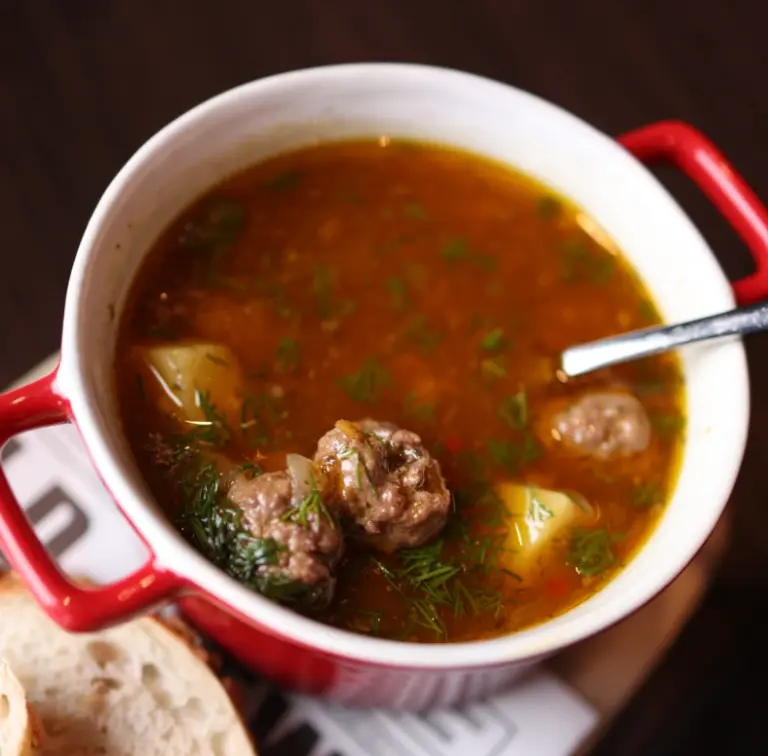
Homemade Meatball Soup with Potatoes and Fresh Dill
A hearty, clear-broth meatball soup with tender beef meatballs, potato chunks, carrots, and a generous handful of fresh dill. Simple, comforting, and ready in just over an hour.
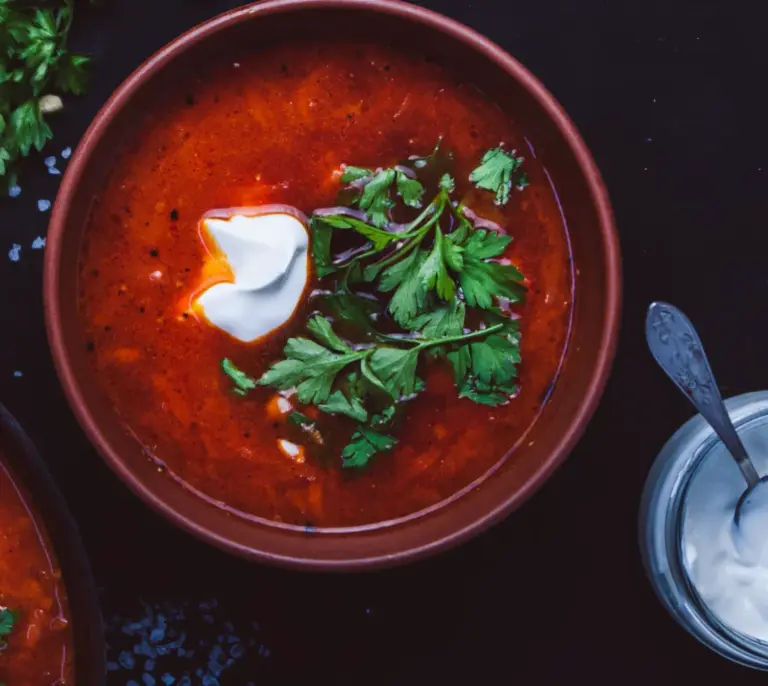
Ukrainian Homemade Borscht Soup with Sour Cream
Classic Ukrainian borscht made with beef on the bone, beets, cabbage, potatoes, and a proper vegetable sauté that keeps the broth that deep crimson red. Served with sour cream and fresh parsley.

Spanish Salmorejo Cold Tomato Soup
Salmorejo is a thick, silky Spanish cold tomato soup from Córdoba made with just ripe tomatoes, bread, garlic, and olive oil, then topped with jamón serrano and hard-boiled egg. No cooking required.
Related searches