Classic German Chocolate Cake
Three layers of deeply dark, moist chocolate sponge filled with the iconic sticky coconut-pecan caramel filling and topped with rich chocolate frosting. A true American classic with a name that has nothing to do with Germany.
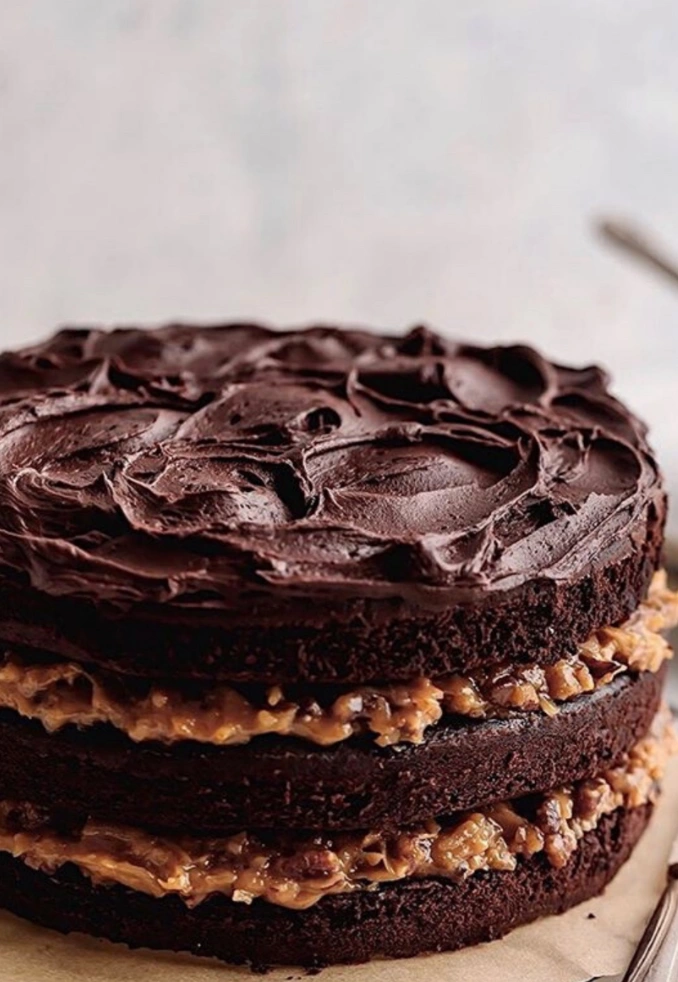
German Chocolate Cake has one of the more misleading names in baking: it has nothing to do with Germany. The recipe takes its name from Sam German, an American baker who developed a sweet baking chocolate for Baker’s Chocolate Company in the mid-nineteenth century. The cake made with that chocolate appeared in a Dallas newspaper in 1957 and spread rapidly from there, eventually becoming a staple of American home baking. The name stuck, the origin got forgotten, and the cake remained excellent regardless.
What makes it genuinely distinctive is the filling: a cooked caramel made from egg yolks, evaporated milk, and brown sugar, loaded with toasted sweetened coconut and chopped pecans. This is not a simple sandwich filling – it is the centrepiece of the cake, sticky and intensely sweet, with a texture that is almost like a very soft praline. The chocolate layers exist to provide contrast: darker, slightly bitter, and dense enough to support the weight and sweetness of what sits between them.
The sponge in this recipe uses Dutch-process cocoa rather than natural cocoa, which produces a darker colour and a smoother, less acidic chocolate flavour that works well against the very sweet filling. If you only have natural cocoa, it will still work – add a small pinch of extra baking soda to the batter to compensate for the change in acidity. Buttermilk keeps the crumb moist and tender and adds a subtle tang that cuts through the richness. Hot coffee deepens the chocolate flavour without making the cake taste of coffee; hot water works fine if you prefer.
The coconut-pecan filling is cooked on the stovetop and needs time to cool and thicken before it can be spread. It should feel like a soft, spreadable caramel – pourable when warm, firm enough to hold between layers once cooled. If it seems too loose after cooling, refrigerate for 15 to 20 minutes. Do not rush this step; a warm filling will soak into the sponge rather than sitting cleanly between the layers.
A swap worth knowing: unsweetened coconut can replace sweetened if you want a less sweet result. The filling will be slightly drier and more rustic in texture, but still very good. Walnuts can replace pecans if needed, though they are slightly more bitter.
The most common mistake with this cake is spreading the filling right to the edge of the layers. The filling is heavy and will squeeze outward under the weight of the next layer – leave a 1cm border around the edge and let the weight of the cake distribute it naturally. This keeps each slice looking clean and prevents the filling from spilling down the sides.
If deeply chocolate layer cakes are your thing, my Hershey’s Chocolate Cake is the simpler comparison to make – or try Chocolate Pound Cake for that same richness baked as a pound cake that keeps all week.
Ingredients for Classic German Chocolate Cake
- Chocolate cake layers:
- 240g (2 cups) all-purpose flour
- 80g (3/4 cup) Dutch-process cocoa powder
- 2 teaspoons baking powder
- 1 teaspoon baking soda
- 1/2 teaspoon fine salt
- 225g (1 cup) unsalted butter, at room temperature
- 300g (1 1/2 cups) granulated sugar
- 4 large eggs, at room temperature
- 2 teaspoons vanilla extract
- 240ml (1 cup) buttermilk, at room temperature
- 240ml (1 cup) hot strong coffee or hot water
- Coconut-pecan filling:
- 3 large egg yolks
- 240ml (1 cup) evaporated milk
- 200g (1 cup packed) light brown sugar
- 115g (1/2 cup) unsalted butter, cut into pieces
- 1 teaspoon vanilla extract
- 130g (1 1/2 cups) sweetened shredded coconut
- 150g (1 1/4 cups) pecans, roughly chopped and toasted
- Chocolate frosting:
- 225g (1 cup) unsalted butter, at room temperature
- 80g (3/4 cup) Dutch-process cocoa powder, sifted
- 450g (4 cups) powdered sugar, sifted
- 120ml (1/2 cup) heavy whipping cream
- 2 teaspoons vanilla extract
- Pinch of fine salt
How to Make Classic German Chocolate Cake
-
1
Preheat the oven to 175C (350F). Grease three 20cm (8-inch) round cake tins and line the bases with parchment paper.
-
2
In a bowl, whisk together the flour, cocoa powder, baking powder, baking soda, and salt until evenly combined. Set aside.
-
3
Beat the butter and granulated sugar together on medium-high speed for 3 to 4 minutes until pale and fluffy.
-
4
Add the eggs one at a time, beating well after each addition. Add the vanilla and mix to combine.
-
5
Add the dry ingredients in three additions, alternating with the buttermilk in two additions, beginning and ending with the dry ingredients. Mix on low speed until just combined after each addition.
-
6
Add the hot coffee (or hot water) and mix on low speed until the batter is smooth - it will be thin and pourable.
-
7
Divide the batter evenly between the three prepared tins and smooth the tops.
-
8
Bake for 28 to 35 minutes, until a toothpick inserted in the center comes out clean and the layers spring back gently when pressed.
-
9
Leave to cool in the tins for 10 minutes, then turn out onto wire racks and cool completely before assembling.
-
10
While the layers cool, make the coconut-pecan filling: whisk together the egg yolks, evaporated milk, and brown sugar in a medium saucepan. Add the butter pieces and cook over medium heat, stirring constantly, until the mixture thickens enough to coat the back of a spoon, about 10 to 12 minutes. Do not let it boil hard.
-
11
Remove from the heat and stir in the vanilla, shredded coconut, and toasted pecans. Transfer to a bowl and leave to cool to room temperature, stirring occasionally. The filling will thicken further as it cools.
-
12
Make the chocolate frosting: beat the butter on medium speed for 2 minutes until smooth. Add the sifted cocoa powder and beat until combined. Add the powdered sugar in two additions, alternating with the heavy cream, beating on low after each addition. Add the vanilla and salt, increase to medium-high, and beat for 2 minutes until smooth, fluffy, and spreadable.
-
13
Place the first cake layer on a serving plate or cake board. Spread half of the coconut-pecan filling over the top, leaving a 1cm border around the edge. Place the second layer on top and spread the remaining filling over it, again leaving a border. Add the third layer.
-
14
Spread the chocolate frosting over the top of the cake, swirling it generously. Leave the sides unfrosted to reveal the filling layers as is traditional, or frost the sides if you prefer.
-
15
Serve at room temperature. Store covered at room temperature for up to 2 days, or refrigerate for up to 4 days - bring to room temperature before serving.
Nutrition (per serving)
- Carbs 82g · 47%
- Protein 8g · 5%
- Fat 38g · 49%
Tips & FAQ
Is German chocolate cake actually German?
Can I substitute German's sweet chocolate with something else?
Why is the coconut pecan filling cooked on the hob?
Do I need to frost the sides of the cake?
How do I toast the pecans and coconut?
More Cakes
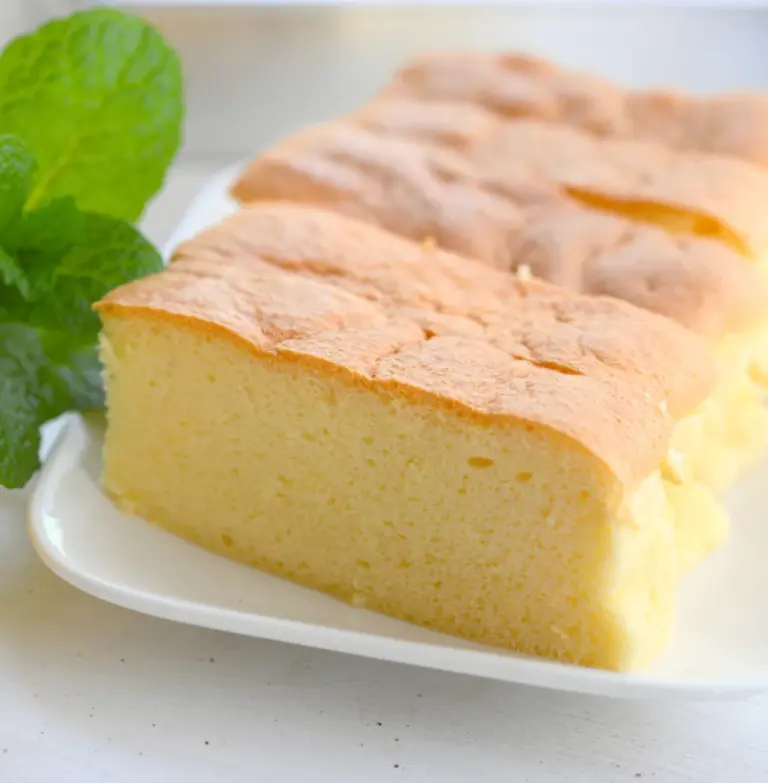
Taiwanese Souffle Castella Cake
A soft, impossibly jiggly Taiwanese castella cake made with a butter-milk base, four eggs, and a soft meringue. Baked low and slow in a water bath for a cloud-like crumb with zero dryness.
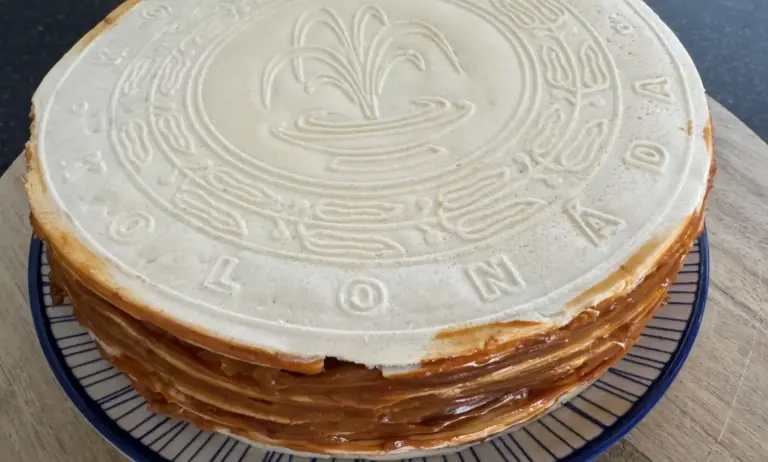
Czech Hazelnut Wafer Cake (Oplatky)
A no-bake Czech classic made with Kolonáda spa hazelnut wafers, mascarpone, dulce de leche, and walnuts. Stack, chill, and slice - the layers soften into something rich and quietly addictive.
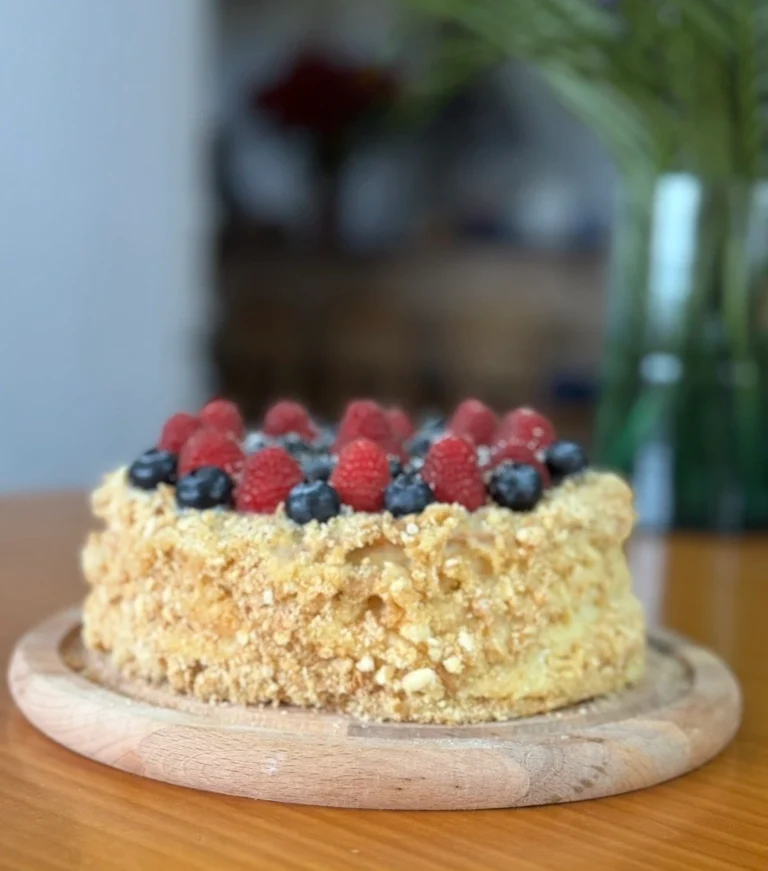
Classic Napoleon Cake (Mille-Feuille)
Dozens of paper-thin, flaky pastry layers soaked overnight in silky vanilla custard - this is the Napoleon cake from every Ukrainian grandmother's recipe box, always made the day before and always worth the wait.
Related searches