Pastel de Nata
Flaky laminated pastry shells pressed by hand into tins, filled with a silky custard scented with lemon and cinnamon, and baked at maximum heat until the tops blister and char in dark, caramelized patches - the real Portuguese custard tart, made from scratch.
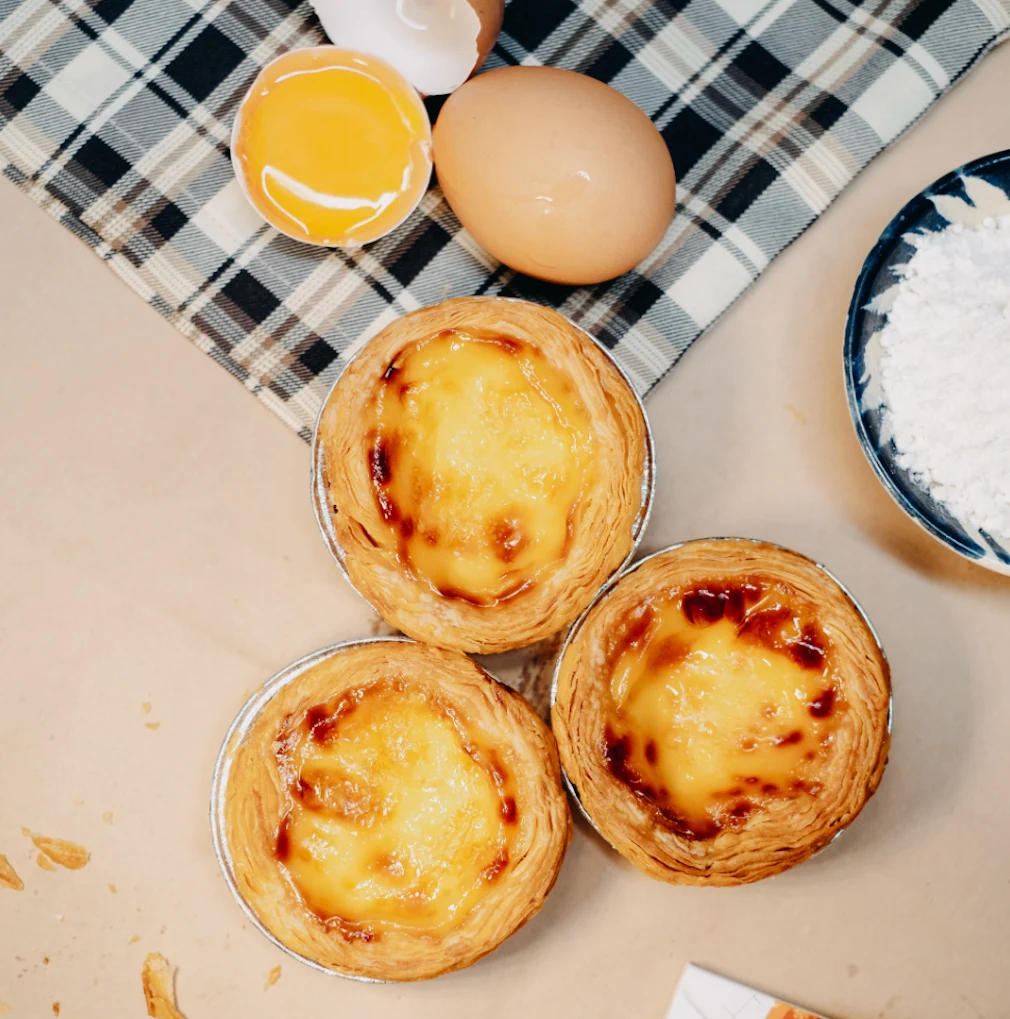
Pastel de Nata has one recipe and one origin. The tart was created by the monks of the Jerónimos Monastery in Belém, Lisbon, sometime in the eighteenth century. When the monastery closed during Portugal’s Liberal Revolution of 1820, a sugar refinery owner acquired the recipe and opened Pastéis de Belém in 1837, where it is still made today using the same formula. Outside that shop, the tarts are called pastéis de nata. Inside, they are pastéis de Belém. The distinction matters to Lisboetas. The recipe matters to everyone else.
There are two things that separate a genuine pastel de nata from an egg tart made in the same shape. The first is the pastry: a laminated dough made by spreading soft butter across a thin sheet of simple flour dough and rolling it tightly into a log, which is then sliced and pressed by hand into the tin. This creates the deeply fluted, shatteringly crisp shell with visible layers running up the sides. Store-bought puff pastry produces a different result – flakier and lighter, but without that characteristic tight, structured crunch.
The second is the custard. Pastéis de Nata use a flour-thickened custard, not one set with cornstarch or egg yolks alone. The flour goes into cold milk, the mixture is cooked until thick, and then a hot cinnamon-and-lemon sugar syrup is whisked in before the egg yolks are added. This produces a custard that is smooth, silky, and slightly denser than a typical crème brûlée – one that can withstand intense oven heat without scrambling.
That heat is the third essential thing, and the one most often missing in home kitchens. These tarts are baked at 250-260°C (480-500°F), as hot as most ovens will go. At that temperature, the pastry turns crisp and golden in minutes and the custard develops its signature dark blistered patches – not burnt, but caramelized and slightly smoky in the best possible way. A tart baked at 180°C will be cooked through, but it will not be a pastel de nata.
At serving, the tarts get a dusting of ground cinnamon and powdered sugar. They are best eaten warm, within two or three hours of baking, when the pastry is still crisp and the custard is just set. The next day is fine but not the same. In Lisbon, people eat them standing at the counter, still too hot to hold comfortably, and they are absolutely right to do so.
If you love pastry work, try Classic Apple Pie as a natural next experiment in the same pastry-forward territory – and Napoleon Cake is worth trying if you want to work with laminated, layered pastry that comes from the same tradition.
Ingredients for Pastel de Nata
- For the laminated dough:
- 200 g (1 2/3 cups) all-purpose flour
- 1/4 tsp fine salt
- 90 ml (6 tbsp) warm water
- 100 g (7 tbsp) unsalted butter, very soft (room temperature)
- For the custard:
- 250 ml (1 cup) whole milk
- 3 tbsp (25 g) all-purpose flour
- 160 g (3/4 cup) granulated sugar
- 80 ml (1/3 cup) water
- 1 cinnamon stick
- 1 strip lemon peel, about 5 cm, white pith removed
- 4 large egg yolks
- 1/2 tsp vanilla extract
- For serving:
- Ground cinnamon, for dusting
- Powdered sugar, for dusting
How to Make Pastel de Nata
-
1
Combine the flour, salt, and warm water in a bowl and mix until a rough dough forms. Turn out onto a lightly floured surface and knead for 1-2 minutes until smooth. Cover with plastic wrap and rest for 15 minutes at room temperature.
-
2
On a well-floured surface, roll the dough into a thin rectangle about 30x40 cm. Spread the very soft butter evenly over the entire surface right to the edges using a spatula. Starting from a short edge, roll the dough tightly into a compact log. Wrap in plastic wrap and refrigerate for at least 30 minutes.
-
3
While the dough chills, make the custard. Whisk the flour with about 4 tablespoons of the cold milk in a medium saucepan until completely smooth, then whisk in the remaining milk. Set aside.
-
4
Combine the sugar, water, cinnamon stick, and lemon peel in a small saucepan. Bring to a boil over medium heat and cook for 3 minutes until the sugar has fully dissolved. The syrup should stay clear - do not let it caramelize. Remove from heat.
-
5
Place the milk-and-flour saucepan over medium heat and cook, stirring constantly with a whisk, until the mixture thickens to a pudding-like consistency and just comes to a boil. Remove from heat immediately.
-
6
Pour the hot sugar syrup into the cooked milk mixture in a thin steady stream, whisking constantly. Add the vanilla and whisk until smooth. Let cool for 5 minutes, then whisk in the egg yolks one at a time until fully incorporated. Strain through a fine-mesh sieve into a jug or bowl with a pour spout. The custard should be pourable and thin - it sets further in the oven.
-
7
Preheat your oven to its maximum temperature, ideally 250-260°C (480-500°F). Lightly butter a standard 12-cup muffin tin.
-
8
Remove the dough log from the refrigerator and slice into 12 equal rounds, each about 1.5 cm thick.
-
9
Place one round cut-side up in each muffin cup. Dip your thumb in cold water and press the dough from the center outward and up the sides of the cup, working it as thin and even as possible all the way to the rim. The base should be quite thin.
-
10
Fill each pastry shell with custard to about 3/4 full. Do not overfill - the custard puffs in the oven.
-
11
Bake at maximum oven temperature for 15-20 minutes, until the pastry is deeply golden and the custard surface has dark, blistered caramelized patches. The dark spots are correct and expected - do not underbake to avoid them.
-
12
Leave to cool in the tin for 5 minutes, then carefully remove each tart with a small knife or offset spatula. Dust generously with ground cinnamon and powdered sugar. Serve warm.
Nutrition (per serving)
- Carbs 29g · 54%
- Protein 4g · 8%
- Fat 9g · 38%
Tips & FAQ
Why are my tarts not getting those dark burnished spots?
Can I use store-bought pastry?
Why is my custard cracking or puffing up?
Can I make these ahead of time?
Do I need the cinnamon and icing sugar on top?
More Pies & Tarts
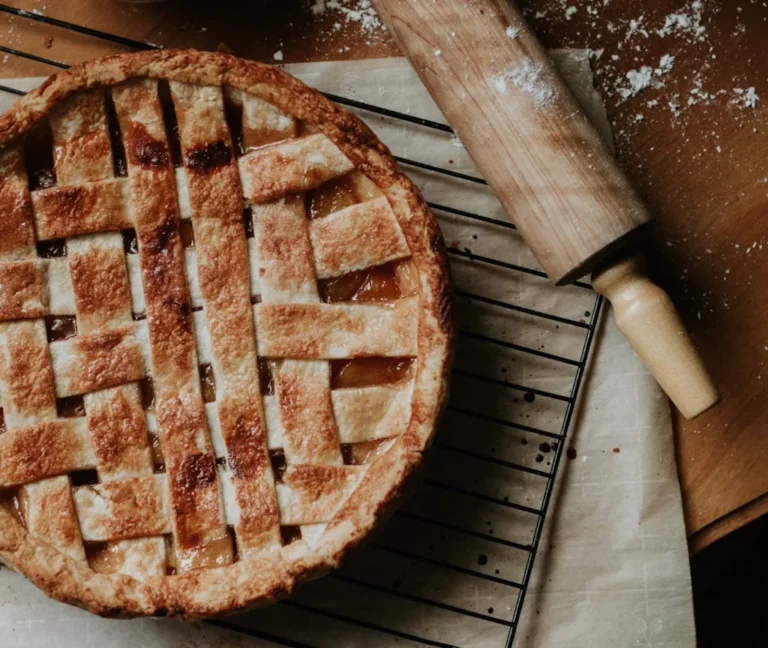
Classic Apple Pie
A golden, deeply spiced apple pie with a buttery homemade double crust and a proper woven lattice top - made from scratch with a mix of tart and sweet apples that hold their shape and taste like autumn in every single slice.
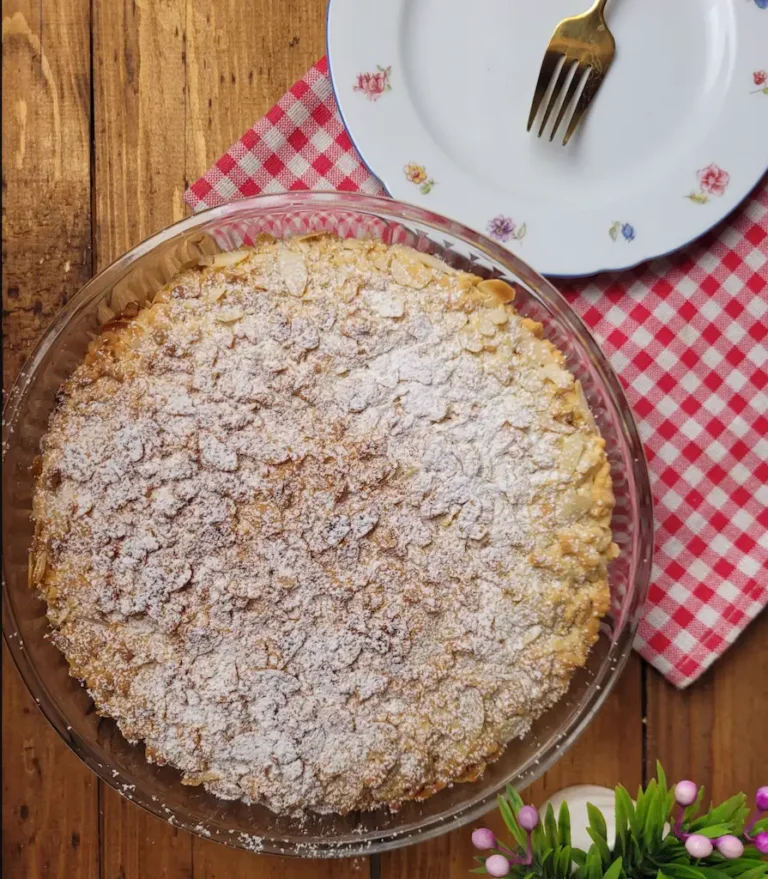
Almond Cake (Tarta de Santiago)
A centuries-old Spanish almond cake from Galicia - naturally gluten-free, intensely nutty, fragrant with lemon and cinnamon, topped with sliced almonds and a generous dusting of powdered sugar. Five ingredients, one bowl, no flour.
Related searches