Fig-Hazelnut Cheesecake
A creamy, lightly sweetened cheesecake on a toasted hazelnut crust, topped with fresh figs and a drizzle of honey. Elegant enough for a dinner party, simple enough for a long weekend afternoon.
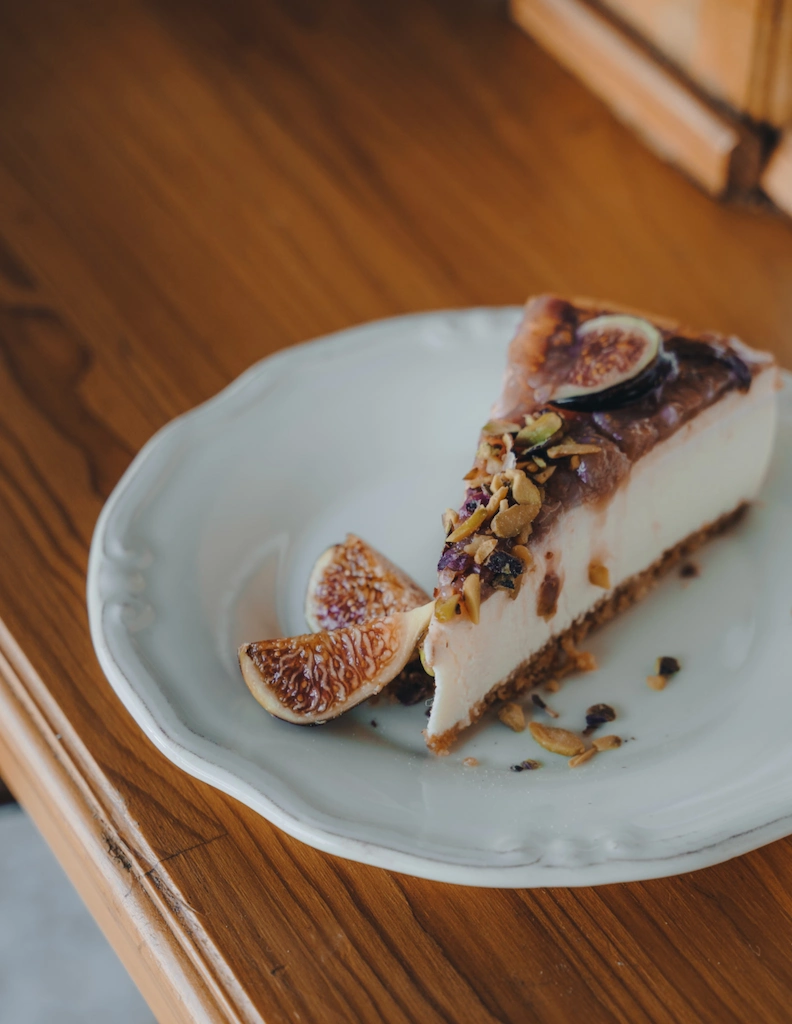
The combination of fig and hazelnut is one of those pairings that feels like it was always supposed to exist. Figs are rich, jammy, and slightly floral, with a sweetness that does not cloy because there is something earthy underneath it. Hazelnuts are toasty, buttery, and have a faint bitterness that keeps everything interesting. Together they make a cheesecake that sits closer to something you would eat at the end of a long autumn dinner than a birthday cake – less sweet, more considered, and significantly more interesting than the standard version.
The crust is made from blitzed digestive biscuits or graham crackers with a generous amount of toasted hazelnuts worked in alongside the butter. Toasting the hazelnuts matters – raw hazelnuts have a pleasant flavour, but toasted ones have a depth that carries through the crust even after baking. Give them 8 to 10 minutes in a dry pan until the skins start to crack and they smell deeply nutty. If you are starting from whole hazelnuts, rub off as much skin as you can in a clean kitchen towel after toasting.
The filling is a classic baked cheesecake base: full-fat cream cheese, sugar, eggs, sour cream, and a little vanilla. Sour cream adds a slight tang that balances the richness and keeps the filling from tasting too heavy. If you cannot find sour cream, full-fat creme fraiche works the same way. The filling bakes gently in a water bath, which prevents the top from cracking and keeps the texture smooth and even. Wrap the outside of the springform tin in two layers of heavy-duty foil before placing it in the water to prevent any seeping in through the base seam.
Fresh figs are the topping, and they should be good ones – ripe, soft, and yielding when gently pressed. Cut some in half and some into quarters for variety, and arrange them over the cooled cheesecake just before serving. A drizzle of honey and a handful of roughly chopped toasted hazelnuts scattered over the top is all the finish you need.
A swap worth knowing: if figs are not in season, ripe pears or roasted grapes work very well over this cheesecake. Both have the same combination of sweetness and slight acidity that pairs well with the hazelnut crust and creamy filling.
The most common mistake with baked cheesecake is overbaking. The center should jiggle gently when you shake the tin – it will firm as it cools and chills. Pull it when the edges are set and the middle still has a little movement. Overnight chilling is ideal; a cheesecake served the day it is made is never quite at its best.
If this kind of dressed-up cheesecake appeals to you, try Classic Philadelphia Cheesecake to understand the base it builds on – and Basque Burnt Cheesecake is the version where you throw the rulebook out entirely.
Ingredients for Fig-Hazelnut Cheesecake
- Hazelnut crust:
- 150g (1 1/2 cups) digestive biscuits or graham crackers
- 100g (3/4 cup) blanched hazelnuts, toasted
- 60g (4 tablespoons) unsalted butter, melted
- 2 tablespoons granulated sugar
- 1/4 teaspoon fine salt
- Cheesecake filling:
- 600g (21 oz) full-fat cream cheese, at room temperature
- 150g (3/4 cup) granulated sugar
- 3 large eggs, at room temperature
- 200ml (3/4 cup) full-fat sour cream
- 1 teaspoon vanilla extract
- 1 tablespoon cornstarch
- Topping:
- 6 to 8 fresh figs, halved or quartered
- 2 tablespoons honey
- 30g (1/4 cup) toasted hazelnuts, roughly chopped
How to Make Fig-Hazelnut Cheesecake
-
1
Preheat the oven to 160C (325F). Grease a 23cm (9-inch) springform tin and line the base with parchment paper.
-
2
Toast the hazelnuts in a dry skillet over medium heat for 8 to 10 minutes, stirring frequently, until golden and fragrant. Transfer to a clean kitchen towel and rub off as much skin as possible. Set aside to cool.
-
3
Blitz the digestive biscuits and toasted hazelnuts together in a food processor until they form fine crumbs. Add the melted butter, sugar, and salt and pulse until the mixture holds together when pressed between your fingers.
-
4
Press the crust mixture firmly and evenly into the base of the prepared tin and about 2 cm up the sides. Refrigerate for 15 minutes while you prepare the filling.
-
5
Beat the cream cheese and sugar together in a large bowl until completely smooth - about 2 to 3 minutes on medium speed with a hand mixer or stand mixer.
-
6
Add the eggs one at a time, beating well after each addition and scraping down the sides of the bowl as needed.
-
7
Add the sour cream, vanilla, and cornstarch and mix on low until just combined and smooth. Do not overmix.
-
8
Wrap the outside of the springform tin tightly in two layers of heavy-duty aluminium foil. Pour the filling over the chilled crust and smooth the top with a spatula.
-
9
Place the foil-wrapped tin in a large roasting pan and fill the pan with hot water to come about halfway up the sides of the springform tin.
-
10
Bake for 55 to 65 minutes, until the edges are set and the center still jiggles gently as a single mass when the tin is shaken. Turn off the oven, crack the door slightly, and leave the cheesecake inside for 30 minutes.
-
11
Remove the cheesecake from the water bath and cool completely at room temperature. Refrigerate for at least 4 hours or overnight before serving.
-
12
To serve, remove the cheesecake from the tin and peel away the parchment. Arrange the fig pieces over the top, drizzle with honey, and scatter over the chopped toasted hazelnuts.
Nutrition (per serving)
- Carbs 32g · 27%
- Protein 8g · 7%
- Fat 35g · 66%
Tips & FAQ
Can I use dried figs instead of fresh?
Do the hazelnuts need to be roasted?
Can I substitute another nut for the hazelnut base?
Why is my cheesecake filling too runny?
How do I get clean slices from a cheesecake?
More Cheesecakes
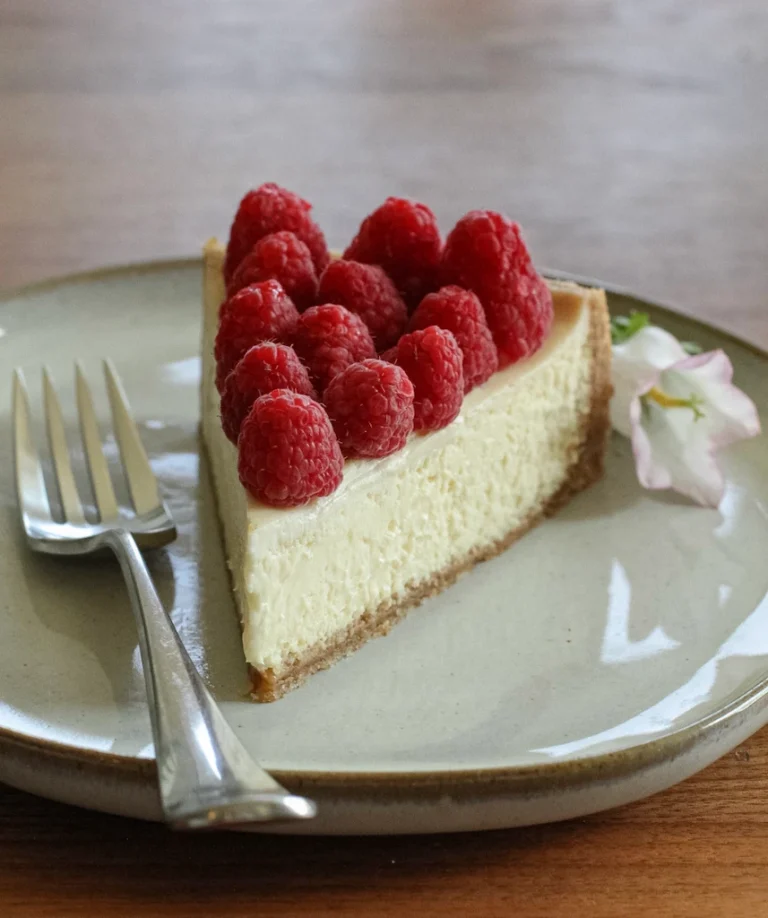
Classic Philadelphia Cheesecake
Tall, dense, and perfectly smooth - the classic American cheesecake made with cream cheese, sour cream, and a buttery graham cracker crust. Rich without being heavy, and exactly what a cheesecake should be.
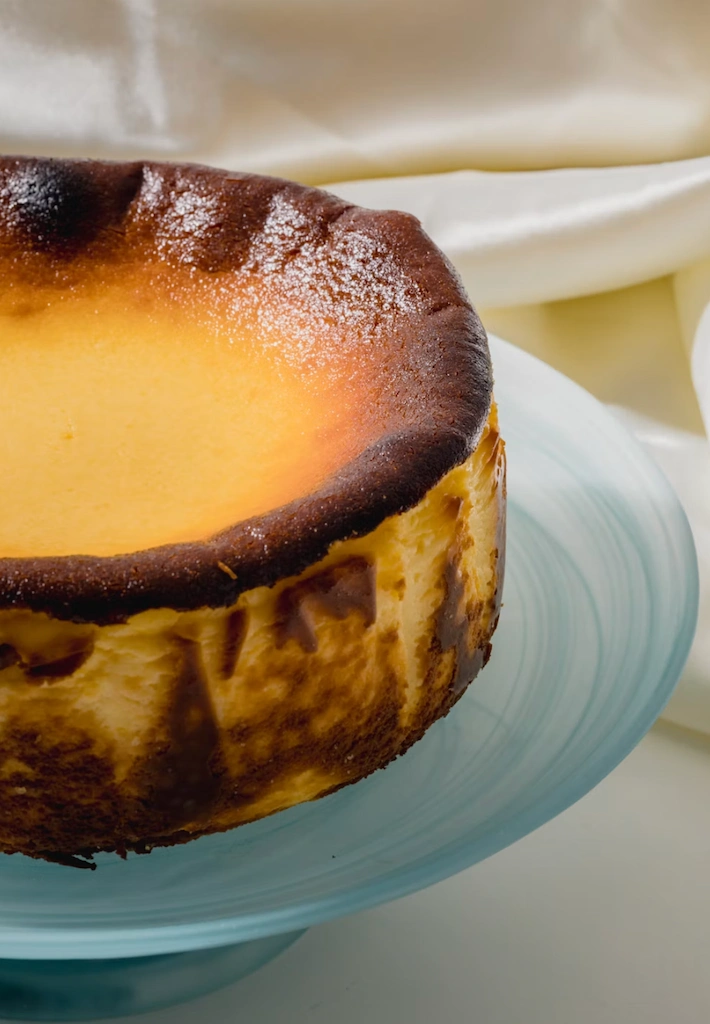
Basque Burnt Cheesecake
The cheesecake that wants to be burnt. No crust, no water bath, no fuss - just cream cheese, eggs, cream, and sugar baked at high heat until the outside is deeply caramelized and the center is barely set and trembling.
Related searches