Classic Philadelphia Cheesecake
Tall, dense, and perfectly smooth - the classic American cheesecake made with cream cheese, sour cream, and a buttery graham cracker crust. Rich without being heavy, and exactly what a cheesecake should be.
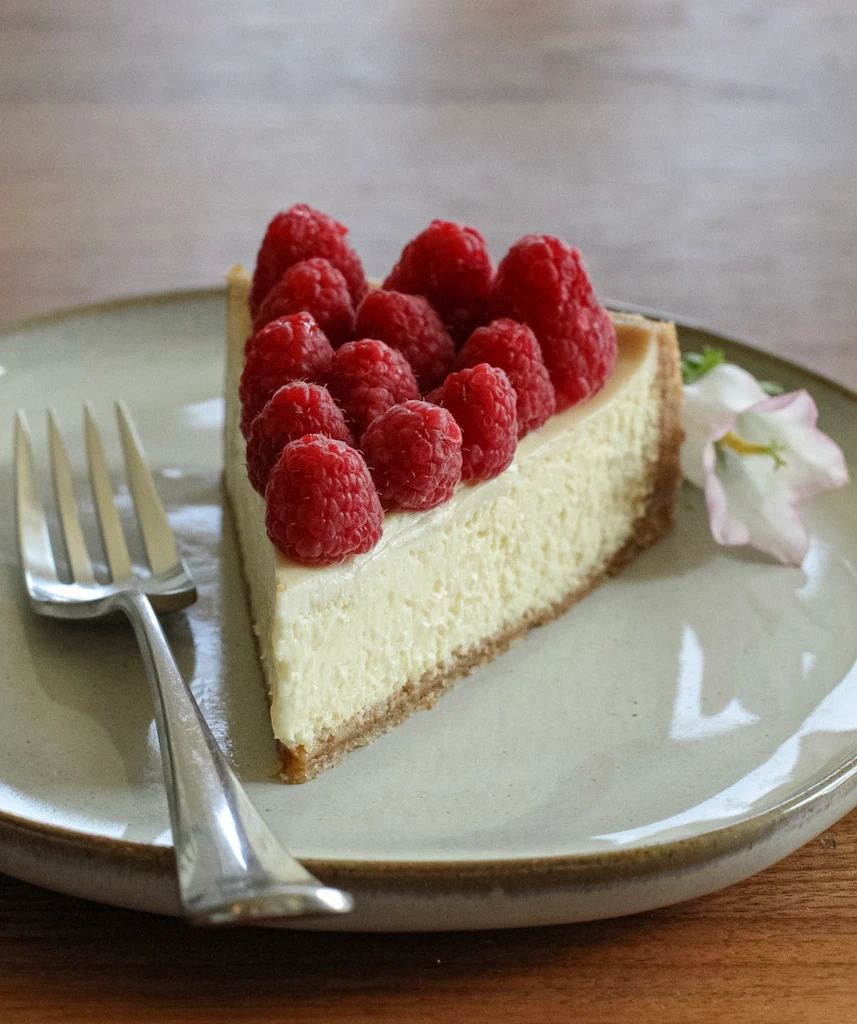
Philadelphia cheesecake – or New York cheesecake, as it is also known – is the benchmark that every other cheesecake style gets compared to. It is tall, dense, smooth, and intensely rich without being cloying. The flavour is clean and straightforward: cream cheese, a little vanilla, a touch of lemon, and just enough sugar to round things out. No fruit swirled through the batter, no chocolate layer, no elaborate topping required. Just a very good cheesecake doing exactly what it is supposed to do.
The name “Philadelphia” in this context refers not to the city but to the brand of cream cheese that became the standard ingredient for this style of cake in the United States. Philadelphia cream cheese has a specific fat content and texture that gives this cheesecake its characteristic density and smooth, almost velvety filling. Other full-fat cream cheese brands work well, but avoid anything labelled “light” or “reduced fat” – the lower fat content means more water, which changes how the filling sets and can produce a grainy or wet texture.
Sour cream goes into the filling alongside the cream cheese. It adds a very slight tang that keeps the richness from feeling flat, and it helps produce the smooth, creamy texture that distinguishes a good cheesecake from a dense one. Some recipes use heavy cream in its place – the result is richer but slightly less bright in flavour. Either works; sour cream is the more traditional choice for this style.
The water bath is worth doing. It sounds like an extra step but it is genuinely the difference between a cheesecake that cracks across the top and one that comes out smooth and even. Wrapping the tin in foil and sitting it in a pan of hot water keeps the temperature around the outside of the cheesecake gentle and even, preventing the proteins in the eggs from setting too quickly and pulling the surface apart. If your springform tin has even a small gap at the seam, use two layers of heavy-duty foil or place the wrapped tin inside a slightly larger tin before putting it in the water.
A reliable swap: the graham cracker crust can be replaced with digestive biscuits for a slightly less sweet base with a more neutral flavour, or with speculoos biscuits for a warm, spiced note that works very well against the plain cream cheese filling.
The most common mistake is overbaking. The filling should have a visible wobble in the center – not liquid, but a single, slow jiggle – when you take it out. It will firm completely as it chills. Overnight in the fridge is the standard, and it is genuinely the right call. Slicing within a few hours of baking will give you a filling that has not fully set and will not cut cleanly.
If classic cheesecake has your attention, try Basque Burnt Cheesecake for the most interesting comparison – same ingredients, completely different logic. Or Fig-Hazelnut Cheesecake if you want to dress the classic version up.
Ingredients for Classic Philadelphia Cheesecake
- Graham cracker crust:
- 200g (2 cups) graham cracker crumbs or digestive biscuit crumbs
- 50g (1/4 cup) granulated sugar
- 100g (7 tablespoons) unsalted butter, melted
- 1/4 teaspoon fine salt
- Cheesecake filling:
- 900g (32 oz) full-fat cream cheese, at room temperature
- 200g (1 cup) granulated sugar
- 4 large eggs, at room temperature
- 240ml (1 cup) full-fat sour cream
- 1 tablespoon fresh lemon juice
- 1 teaspoon vanilla extract
- 2 tablespoons all-purpose flour
- To serve:
- Fresh raspberries or strawberries (optional)
How to Make Classic Philadelphia Cheesecake
-
1
Preheat the oven to 165C (325F). Grease a 23cm (9-inch) springform tin and line the base with parchment paper.
-
2
Combine the graham cracker crumbs, sugar, melted butter, and salt in a bowl and stir until the mixture resembles wet sand and holds together when pressed. Press firmly and evenly into the base and about 3 cm up the sides of the tin. Bake for 10 minutes, then set aside to cool slightly.
-
3
Beat the cream cheese in a large bowl on medium speed until completely smooth, about 2 minutes. Scrape down the sides of the bowl.
-
4
Add the sugar and beat for another 2 minutes until light and smooth.
-
5
Add the eggs one at a time, beating on low speed after each addition just until combined. Do not overbeat once the eggs go in - too much air will cause the cheesecake to puff and crack.
-
6
Add the sour cream, lemon juice, vanilla, and flour and mix on low until just smooth and combined. Scrape down the sides of the bowl.
-
7
Wrap the outside of the springform tin tightly in two layers of heavy-duty aluminium foil. Pour the filling over the pre-baked crust and smooth the top.
-
8
Place the foil-wrapped tin in a large roasting pan and fill the pan with hot water to come about halfway up the sides of the springform tin.
-
9
Bake for 60 to 70 minutes, until the edges are set and the center has a slow, gentle wobble as a single mass when the tin is shaken. The top should look just set and barely coloured.
-
10
Turn off the oven, crack the door slightly, and leave the cheesecake inside for 1 hour. This gradual cooling helps prevent cracking.
-
11
Remove from the water bath and cool completely at room temperature. Run a thin knife around the edge of the tin, then refrigerate for at least 6 hours or overnight.
-
12
Remove from the tin just before serving. Top with fresh raspberries if desired. Slice with a clean sharp knife, wiping the blade between cuts for the neatest result.
Nutrition (per serving)
- Carbs 36g · 29%
- Protein 8g · 7%
- Fat 35g · 64%
Tips & FAQ
Why did my cheesecake crack?
Do I need to use a water bath?
Can I use cream cheese other than Philadelphia?
Why is my cheesecake too dense or rubbery?
How far ahead can I make cheesecake?
More Cheesecakes
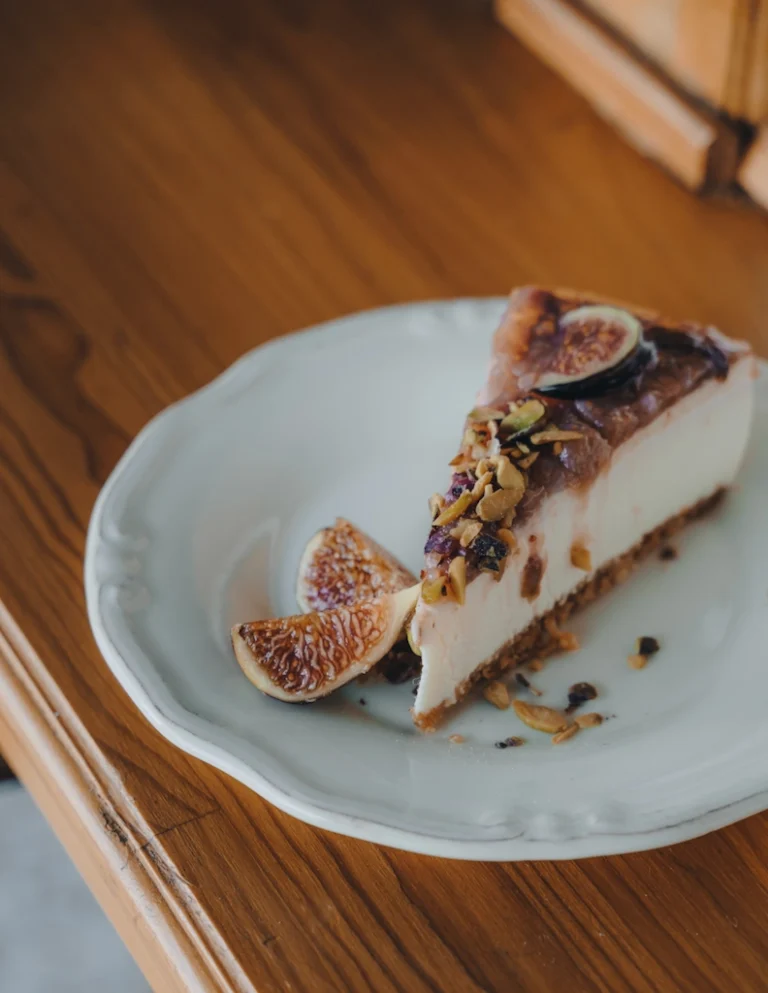
Fig-Hazelnut Cheesecake
A creamy, lightly sweetened cheesecake on a toasted hazelnut crust, topped with fresh figs and a drizzle of honey. Elegant enough for a dinner party, simple enough for a long weekend afternoon.
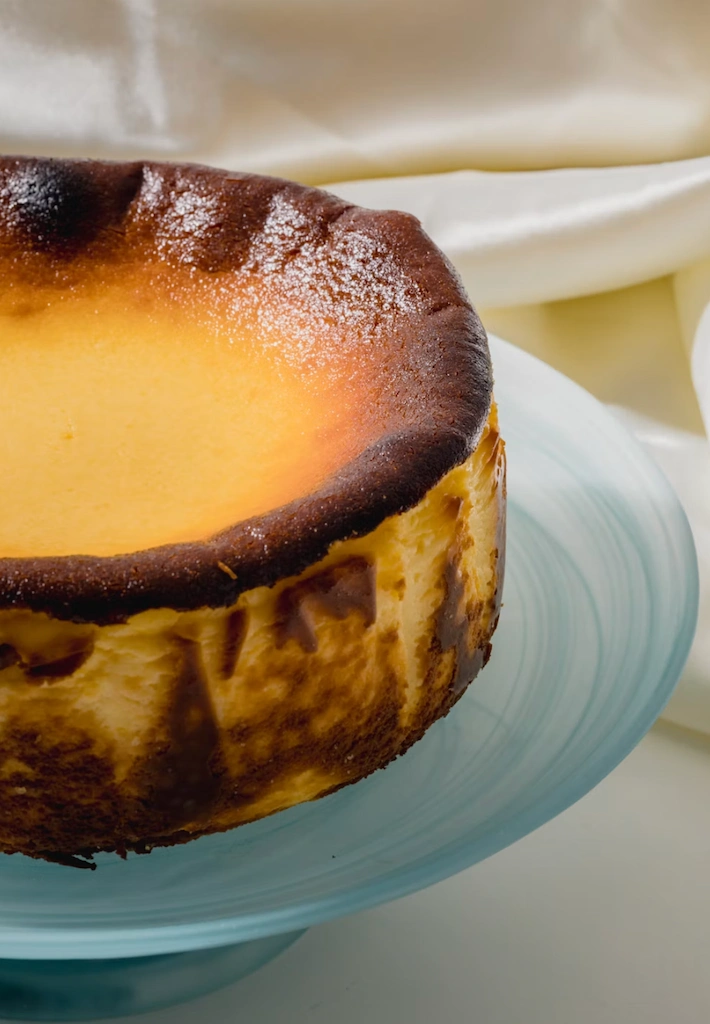
Basque Burnt Cheesecake
The cheesecake that wants to be burnt. No crust, no water bath, no fuss - just cream cheese, eggs, cream, and sugar baked at high heat until the outside is deeply caramelized and the center is barely set and trembling.
Related searches