Almond Cake (Tarta de Santiago)
A centuries-old Spanish almond cake from Galicia - naturally gluten-free, intensely nutty, fragrant with lemon and cinnamon, topped with sliced almonds and a generous dusting of powdered sugar. Five ingredients, one bowl, no flour.
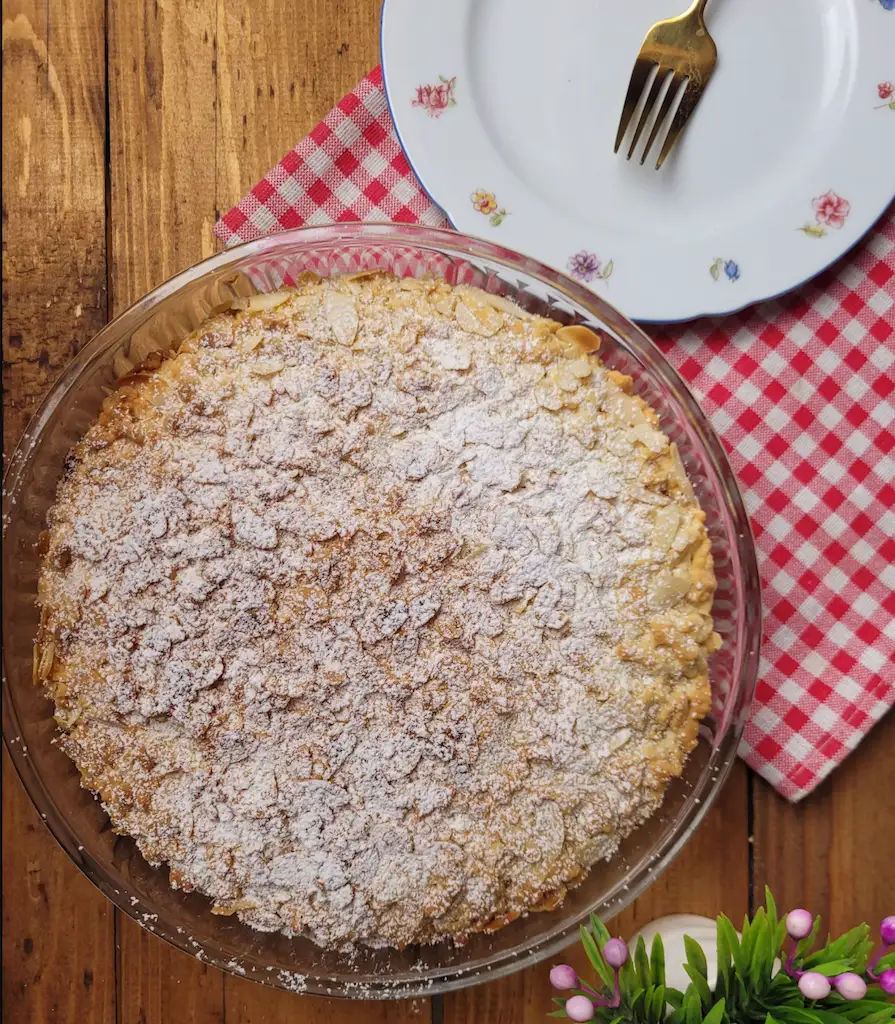
Tarta de Santiago is one of the oldest cakes in European baking, with records of it appearing in the markets of Santiago de Compostela in the sixteenth century. It is a Galician recipe from the northwest of Spain, traditionally made as an offering to pilgrims who completed the Camino de Santiago – and it has barely changed in five hundred years, because there was nothing to improve.
The recipe has five ingredients: ground almonds, sugar, eggs, lemon zest, and cinnamon. No flour, no butter, no leavening agent. The structure comes entirely from the almonds and the eggs, which means this cake is naturally gluten-free without any substitutions or workarounds. It is also one of the easiest cakes to make – one bowl, no stand mixer required, no resting time, and under an hour from start to finish.
The almonds are the whole point. Use blanched ground almonds (almond flour or almond meal made from skinless almonds) rather than skin-on, which gives the cake a coarser texture and a slightly bitter edge. The finer the grind, the more cohesive and tender the crumb. If you can only find whole blanched almonds, grind them in a food processor until fine – stop before they start releasing their oil and turning into paste.
The eggs and sugar need to be whisked together before the almonds go in. You are not looking for a pale, airy ribbon the way you would for a sponge cake. This cake is not trying to be light. You want the sugar to dissolve into the eggs and the mixture to turn slightly paler and thicker – about two minutes of vigorous whisking by hand. The almonds go in all at once and the batter comes together in seconds.
The most common mistake with this cake is overbaking. It should be golden on top and set around the edges, but still have a very faint give in the center when pressed gently. That softness firms up as the cake cools and gives Tarta de Santiago its characteristically moist, dense, almost fudgy interior. Pull it at 33-35 minutes and trust it.
Traditionally the cake is finished by stenciling the Cruz de Santiago – the Cross of Saint James – in powdered sugar on top. This version adds sliced almonds before baking, which gives the surface a toasted crunch beneath the powdered sugar. Both approaches are authentic; the almond-topped version simply adds texture.
This cake is genuinely better the day after baking. The lemon and cinnamon deepen overnight, the interior settles into something richer and more cohesive, and it slices more cleanly. If you can make it the evening before you plan to serve it, do.
If you love the simplicity of a nut-forward cake, try Pistachio Cake next – or Classic Vanilla Bundt Cake if you want something closer to a classic but still unfussy and easy to put together.
Ingredients for Almond Cake (Tarta de Santiago)
- 250 g (2 1/2 cups) blanched ground almonds (almond flour or finely ground almond meal)
- 200 g (1 cup) granulated sugar
- 3 large eggs, at room temperature
- Zest of 1 large lemon, finely grated
- 1 tsp ground cinnamon
- 1/4 tsp almond extract (optional)
- A pinch of fine salt
- Softened butter, for greasing the pan
- 40 g (1/3 cup) sliced almonds, for the top
- Powdered sugar (icing sugar), for dusting
How to Make Almond Cake (Tarta de Santiago)
-
1
Preheat your oven to 180°C (350°F). Butter a 23-24 cm (9-inch) round cake pan or pie dish generously. Line the bottom with a circle of parchment paper and dust the sides lightly with a little ground almond, tapping out the excess.
-
2
In a large bowl, whisk together the eggs and granulated sugar vigorously for about 2 minutes until the mixture turns slightly paler and the sugar has mostly dissolved. You are not aiming for a mousse - just a cohesive, slightly thickened mixture.
-
3
Add the ground almonds, lemon zest, cinnamon, almond extract if using, and salt. Stir with a spatula until everything is evenly combined into a thick, dense batter.
-
4
Transfer the batter to the prepared pan and spread it out evenly with the spatula, making sure it reaches the edges. Scatter the sliced almonds over the entire surface in an even layer.
-
5
Bake for 33-38 minutes, until the top is deep golden and the cake is set and pulling slightly away from the edges. The center should have just a very faint give when pressed gently - this is correct. Do not overbake; the cake firms further as it cools and should remain moist inside.
-
6
Leave the cake to cool in the pan for 15 minutes, then run a knife around the edge and carefully transfer to a wire rack. Cool completely before dusting - at least 1 hour.
-
7
Once fully cool, dust generously with powdered sugar through a fine-mesh sieve. For the traditional presentation, cut the shape of the Santiago cross from a piece of paper, lay it in the center of the cake, dust around it with powdered sugar, then lift the template to reveal the cross beneath. Serve at room temperature. The cake keeps well covered for 3-4 days and tastes even better on day two.
Nutrition (per serving)
- Carbs 24g · 35%
- Protein 8g · 12%
- Fat 16g · 53%
Tips & FAQ
Is Tarta de Santiago naturally gluten-free?
Can I use whole almonds instead of almond meal?
What is the traditional decoration on top?
Why is my tarta too moist or dense in the centre?
What flavours pair well with Tarta de Santiago?
More Pies & Tarts

Pastel de Nata
Flaky laminated pastry shells pressed by hand into tins, filled with a silky custard scented with lemon and cinnamon, and baked at maximum heat until the tops blister and char in dark, caramelized patches - the real Portuguese custard tart, made from scratch.
Classic Apple Pie
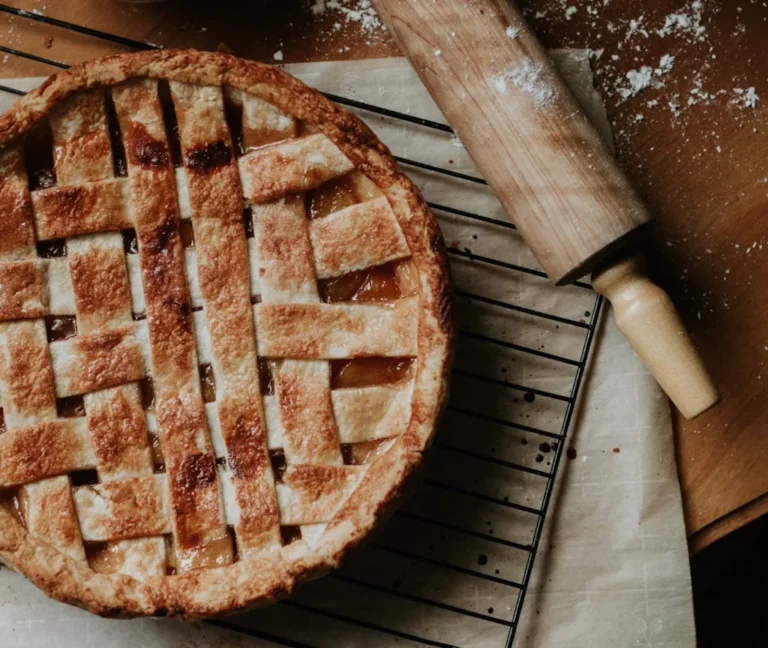
A golden, deeply spiced apple pie with a buttery homemade double crust and a proper woven lattice top - made from scratch with a mix of tart and sweet apples that hold their shape and taste like autumn in every single slice.
Related searches